

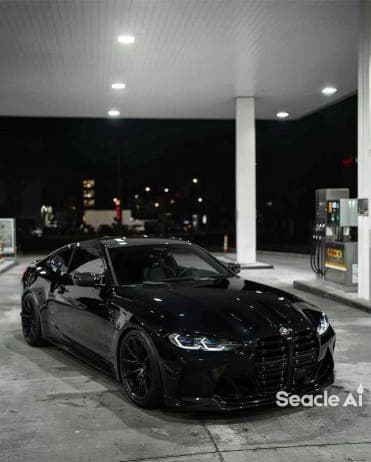

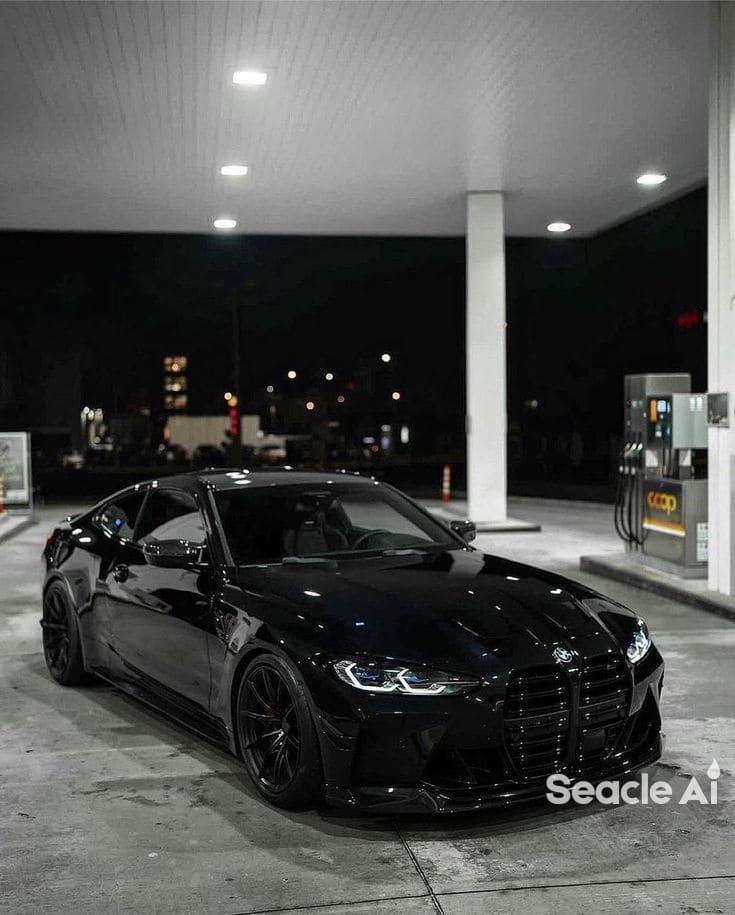
Powerful machines have habits: they ask for attention, corrects in the hands, and reward the driver who understands them. The bmw m4 is one such machine. In the first 100 words here I use the name because the M4’s character is central to every practical point I make: what it demands from you, what you get back, and where it falls short in everyday life.
Table of Contents
- bmw m4: Engine and performance
- Key specifications and what they mean
- Minimum driver height and practical fit
- bmw m4: Safety, comfort and technology
- Common real-world limitations
- Comparison with mercedes amg gt
- Confirmed vs expected details
- Who this is NOT for
- Frequently Asked Questions
- Conclusion

bmw m4: Engine and performance
The M4 is a focused performance coupe (and convertible in many markets) built around a turbocharged straight-six. In day-to-day driving it feels like a concentrated package of torque and responsiveness; under sustained stress, it needs careful cooling and premium maintenance. That combination of immediate response and mechanical sympathy is what makes it distinct from softer luxury coupes.
Powertrain basics
- Engine type: 3.0-litre twin-turbo inline-six (S58 family) in current mainstream models.
- Power: roughly in the 470–510 hp range depending on variant and market (base versus Competition models).
- Transmission: typically an 8-speed automatic in Competition models; some markets and trims have offered a 6-speed manual on standard variants, depending on the year.
In practical terms, that engine delivers strong mid-range torque. You get the best overtaking response between 2,000 and 5,000 rpm; below that the turbochargers have less bite, and above 6,500 rpm the party winds down. If you drive daily around town, the M4’s characteristics reward smooth throttle control. If you push it regularly on track, you’ll learn about brake and tire wear quickly.
Performance figures (typical, rounded)
- 0-100 km/h (0-62 mph): mid 3-second to low 4-second range depending on trims and traction options.
- Top speed: electronically limited to 250 km/h (155 mph) as standard; optional packages can raise the limiter toward 290 km/h (180 mph).
- Real-world fuel use: expect 8–12 L/100 km depending on driving style — sport driving will push this toward the higher end.
Condition-based observation: under repeated high-load sessions, such as intense track days, even well-sorted cooling systems show heat soak. That affects throttle response and lap consistency unless you supplement with upgraded cooling or run restricted sessions. Over months of spirited driving, brake pad and tire replacement are frequent and costly items to budget for.
Key specifications and what they mean
Engine, power and torque
The engine math is simple to read but the experience is complex. Peak power numbers tell you how fast the car can go in ideal runs, while torque curves tell you how effortless it feels in typical driving. The M4’s straight-six gives a linear, muscular torque delivery that rewards precise throttle inputs.
Top speed and gearing
Gearing and transmission choices affect acceleration feel and cruising economy. The 8-speed automatic keeps the engine in an optimal band and will produce smoother, faster shifts under most conditions than the manual; the manual does offer a more connected experience but usually costs a fraction in launch performance and outright lap times.
Height and dimensions
- Overall height: around 1,380–1,390 mm (roughly 54–55 in) depending on suspension and trim.
- Width and length: compact coupe footprint—low-slung roofline, wide track for stability.
Practical note: the low height means ingress and egress is sportier than a sedan; tall drivers should check headroom if they use a sunroof or have aftermarket seats.
Minimum driver height and practical fit
What is the minimum height to ride the bmw m4? A practical minimum driver height is roughly 155 cm (about 5 ft 1 in) to reach pedals comfortably and achieve a safe line of sight for most people, assuming standard seat and steering column adjustments. Taller drivers up to around 195 cm (6 ft 5 in) typically find a usable position thanks to adjustable seats and steering.
Human judgement: I prefer cars that offer a broad range of adjustability. In long-term ownership you notice seat fatigue — the M4’s bolstering is supportive for spirited driving but on long trips the same bolsters become pressure points if you don’t adjust seat position periodically.
Condition observation: if multiple drivers of very different heights share the car, expect to tweak the seat and mirrors each time — memory settings make this manageable, but frequent swaps will wear controls faster than more casual ownership.
bmw m4: Safety, comfort and technology
Safety equipment and driver aids have come a long way. The M4 combines performance hardware with modern driver assistance, but the mix is about driver control rather than autonomous convenience.
Key safety systems
- Active safety: ABS with performance tuning, dynamic stability control with multiple intervention levels, and selectable traction control maps for varied surfaces.
- Braking: large ventilated discs as standard, with optional carbon-ceramic brakes for reduced fade under track use.
- Driver assists: lane-keeping, adaptive cruise, blind-spot detection and automatic emergency braking in most markets; the exact suite varies by model year and package.
Comfort and daily usability
- Seats: deeply bolstered sport seats are excellent for cornering but can be tiring on long tours unless you choose adaptive or softer seat options.
- Ride: adaptive dampers are common; in the firmest settings the M4 is raw and communicative, and in the softest settings it remains firmer than family sedans.
- Infotainment: BMW’s latest iDrive iteration (as of 2025) with smartphone integration, over-the-air updates in many regions, high-resolution display and advanced navigation.
Practical note: the M4 balances comfort and control. If you value a plush, whisper-quiet cabin over chassis feedback, the M4 may feel too direct. After long drives on coarse pavement, you feel the suspension choices; the car communicates road texture more than a luxury cruiser will.
Common real-world limitations
No car is perfect, and the M4 has a few trade-offs you will meet in daily use.
- Fuel economy: high-performance tuning and heavy components mean fuel costs are significantly higher than non-performance equivalents. If your commute is long and mostly highway, you will see lower economy than a turbo four-cylinder sedan.
- Ride vs handling trade-off: firm suspension improves cornering precision but transmits vibrations and impacts. This is a suspension philosophy, not a defect—choose your trim accordingly.
- Running costs: tires, brakes, premium fuel and scheduled maintenance are more expensive than mainstream cars. Insurance premiums are also higher.
- Luggage and rear seats: limited space compared with larger grand tourers. The M4 is best as a two-seater for luggage or a compact four if you accept tight rear seats.
Time-based observation: after 2–3 years of spirited driving, owners often report the largest recurring costs are tires and brake service. If you plan heavy track use, expect those operating costs to climb steeply year on year.
Comparison with mercedes amg gt
Below I contrast several practical points between these two cars so you can see where the M4 stands in context. The aim is to help you decide which fits your priorities, not to glorify one brand.
| Aspect | BMW M4 | Mercedes AMG GT |
|---|---|---|
| Engine and overall performance | 3.0L twin-turbo inline-six, very linear torque delivery, sharp throttle response | Typically front-mid V8 or twin-turbo V8 in recent GT models, stronger low-end shove and different sound character |
| Torque, top speed, mileage | Torque in the 400–650 Nm range depending on variant; limited top speed ~250 km/h standard; economy roughly 8–12 L/100 km | Higher torque in V8 variants, similar top speed limits with performance packages; economy generally comparable or a bit worse due to larger engines |
| Key features | Driver-focused chassis, modern infotainment, adaptive dampers and selectable dynamics | Sports GT orientation, often more exotic styling, lightweight options and bespoke interiors |
| Price range | Depends on trim and options; typically sits below the top AMG GT trims in base price but overlaps in higher-spec builds | Starts higher on average for comparable performance trims; limited-edition GTs and AMG derivatives command premium pricing |
| Which user should choose? | Drivers who want a balanced, sharp sports coupe that works on road and occasional track | Buyers who prioritize grand touring presence, V8 sound and exclusive styling over raw, chassis-focused feedback |
| Tank capacity | Approximately 60–65 litres depending on spec | Similar range, often 60–70 litres depending on model |
| Braking and safety features | Large ventilated discs standard; carbon-ceramic optional; advanced driver assists available | Comparable brake hardware with high-end options; similar active safety features with some variations by package |
Decision clarity: if you want sharper handling and a more interactive chassis for twisty roads, the M4 makes sense. If you want V8 character and a GT presence that excels at long, fast touring, the AMG GT may be preferable. This is a practical split, not an absolute — both cars have variants that blur lines.
Confirmed vs expected details
Confirmed specifications
- 3.0-litre twin-turbo straight-six in current M4 models.
- Standard electronic top-speed limiter at roughly 250 km/h (155 mph).
- Availability of both stepped automatic transmissions and, in certain trims/markets, a manual gearbox historically offered.
Expected or rumoured items (as per reports)
- Newer model years are likely to see mild hybrid assistance or electrified aids in some markets to meet emissions regulations; these are expected but not guaranteed across all trims.
- Special editions with uprated cooling, increased output, or cosmetic packages are likely based on BMW’s product cadence, but final specs may change.
Important: when details are labeled as expected or rumored they can shift ahead of release. Treat projections conservatively when budgeting or planning purchases.
Who this is NOT for
This section is blunt because the M4’s personality excludes some buyers.
- If you want a quiet, cushioned commuter that prioritizes soft ride and maximum fuel economy, the M4 may not work.
- If you need a car for heavy cargo or frequent off-road driving, this is not the right vehicle — the low ride height and sport setup limit utility and ground clearance.
- If your priority is lowest possible ownership cost and long service intervals, consider other, less performance-oriented models.
Personal evaluation: I like cars that make you work a bit for rewards. The M4 gives precise control and a satisfying feedback loop, but it demands more in maintenance and attentiveness than a casual daily. If you value minimal fuss, look elsewhere.
Frequently Asked Questions
Is the bmw m4 practical as a daily driver?
Yes, if you accept firmer ride, premium fuel, and higher running costs. For short commutes and spirited weekend drives it is excellent; for long, cushioned touring every day, there are more comfortable alternatives.
Can the bmw m4 be used for track days?
Definitely. The M4 is well-suited to track use but expect higher service intervals for brakes, tires and fluids. For frequent track use, consider upgraded cooling and brake packages.
How expensive is maintenance on the bmw m4?
Maintenance costs are above average. Expect higher prices for tires, brakes, engine servicing and consumables. Over time, ownership costs can exceed those of less powerful sedans by a significant margin.
Does the bmw m4 have a manual transmission option?
In several recent model years a 6-speed manual has been offered on select trims in certain markets, while Competition trims typically use an 8-speed automatic. Availability depends on the model year and market.
Conclusion
The bmw m4 is a focused performance coupe that rewards drivers who want direct feedback, linear torque delivery and a car that performs well on both road and occasional track use. Strengths include a potent inline-six, excellent chassis balance, and modern infotainment and safety tech. Drawbacks are real: firm ride in the sportier settings, higher fuel and maintenance costs, and limited rear-seat and cargo space compared with larger grand tourers.
This matters in practice: if you want a car that is primarily for spirited driving and occasional touring, the M4 makes sense. If your priority is relaxed long-distance comfort, low running costs, or heavy cargo hauling, this may not work. Over time, keep in mind the operating expenses and wear items that increase with hard use.
Practical takeaway: buy the M4 if you want a driver-focused coupe that is lively, rewarding and demanding in equal measure. If you want ease, minimal upkeep and the softest ride possible, look elsewhere. The M4’s engineering gives it a sculpted rigidity under cornering — think of building a delicate structure from compact, cohesive material: it performs beautifully when treated with the correct mix of care and intent, but neglect the foundations and the performance quickly shows structural wear.