
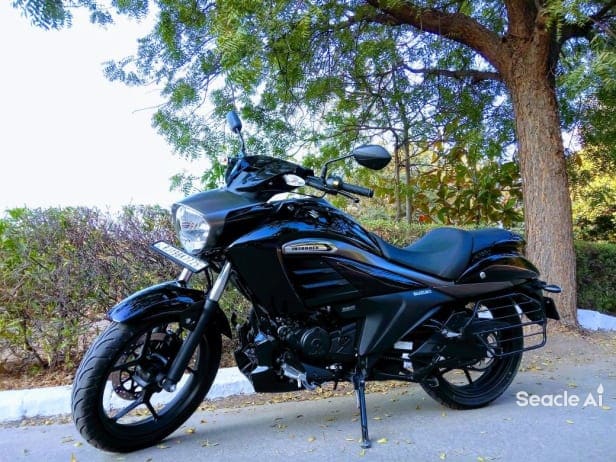

Suzuki Intruder 150 is a compact cruiser-style motorcycle designed to give relaxed ergonomics and cruiser looks in a package that’s usable in Indian cities and short highway runs. It’s aimed at riders who want the laid-back posture and styling of a cruiser without the bulk or running costs of larger bikes.
Table of Contents
- First impression and who it’s for
- Key specifications (engine, power, torque, top speed, mileage)
- Important features: safety, comfort & technology
- Limitations and who should avoid it
- Real-world riding notes and observations
- Suzuki Intruder 150 vs Royal Enfield Meteor 350
- Alternatives and buying advice
- FAQs
- Conclusion
First impression and who it’s for
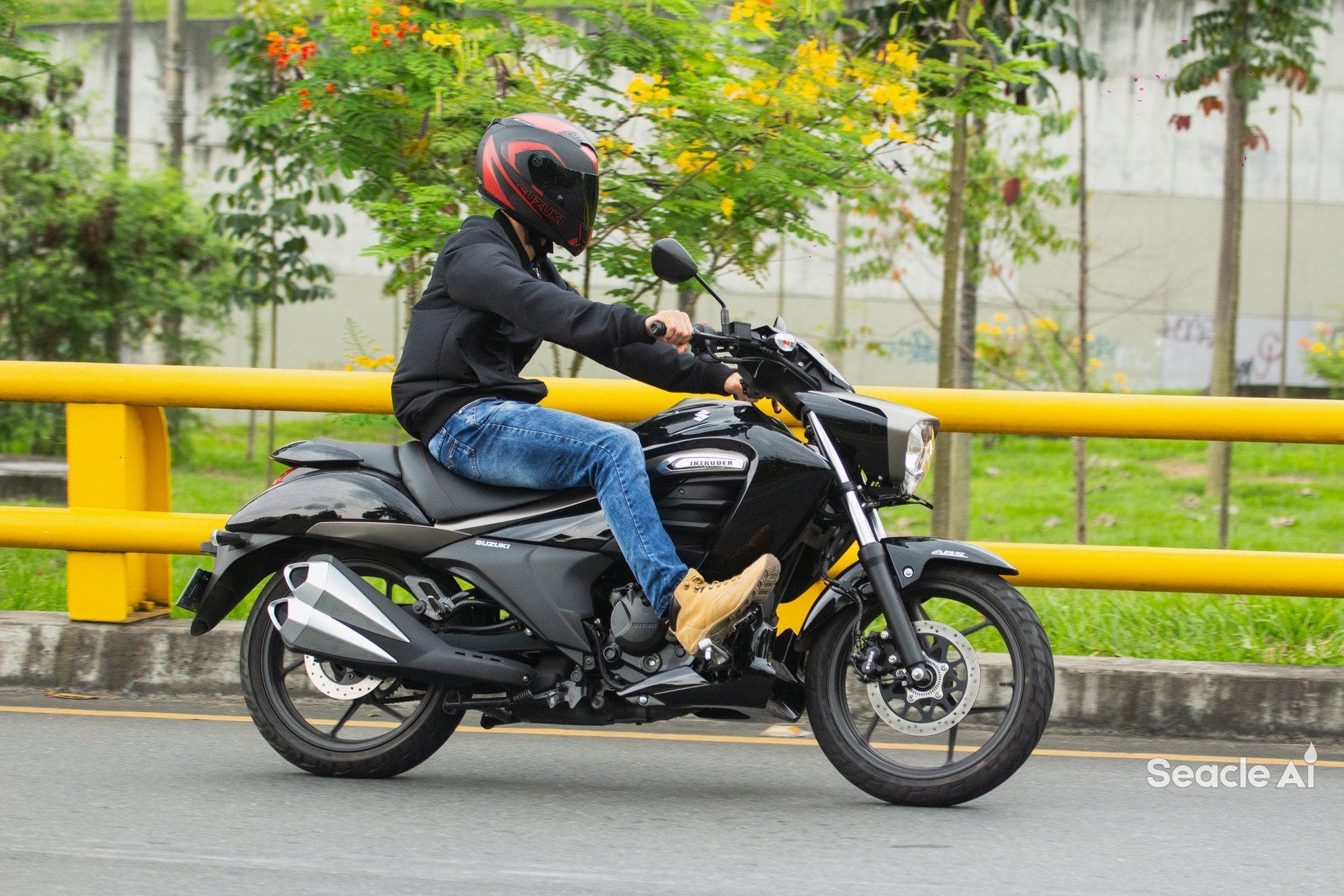
The Intruder is unmistakably a cruiser in styling: low-slung seat, forward-set footpegs and a relaxed handlebar sweep that encourages an upright, comfortable posture. That makes it a strong choice for urban riders who prioritise posture and style over outright pace. Shorter riders usually notice the low seat height (around 765 mm) first, which helps confidence at stops. If you want an affordable cruiser for city commutes, occasional expressway runs and easy weekend rides, this fits that niche well.
Key specifications (Intruder 150 specs)
Below are the main confirmed numbers and what they mean on the road.
- Engine: Single-cylinder, air/oil-cooled 155cc (confirmed in 2025 models). The motor is tuned for low-end torque rather than high-rpm power, so overtakes at 40–60 km/h are straightforward.
- Power: ~14.8 PS at 8,000 rpm (typical for the class). This is enough for city traffic and brief highway bursts but not for sustained high-speed touring.
- Torque: ~14 Nm at 6,000 rpm. The torque curve gives a relaxed, pull-at-low revs feel which matches the cruiser intent.
- Top speed: Practical top speed hovers around 115–125 km/h depending on rider weight and wind—realistically 100–110 km/h for relaxed cruising.
- Mileage: Expect 45–55 km/l in mixed city-highway use; high-traffic commuting will push it towards the lower end of that range.
- Transmission: 5-speed gearbox with a light clutch—gearing favours relaxed cruising over quick acceleration.
- Seat height & minimum rider height: Seat height ≈ 765 mm. Minimum practical height to ride comfortably is about 155 cm (5’1″), though confidence and reach improve above 160 cm.
- Kerb weight: Around 145–150 kg, which is manageable for most riders at low speeds but feels planted on open roads.
Confirmed vs expected
Confirmed: engine displacement, seating position, gear count and cooling type are confirmed on models sold 2025 onwards. Expected: small detail updates such as optional ABS mapping or cosmetic package changes have been reported but may differ by market and year.
Important features: safety, comfort & technology (Intruder 150 mileage)
The Intruder’s equipment list is simple and focused on usability.
- Safety: Single-channel ABS or dual-channel (market dependent) combined with a disc front and either drum or disc rear. ABS significantly improves panic-stop stability on mixed-surface Indian roads.
- Comfort: Wide, cushioned cruiser seat and forward footpegs reduce knee strain on short to medium rides. The shell isn’t built for multi-day touring—expect rider fatigue to build after 3–4 hours unless you plan frequent breaks.
- Technology: Basic digital-analog cluster with fuel gauge, trip meter and gear position indicator in some variants. No traction control or ride modes—keeps complexity and maintenance low.
Observation: the suspension is tuned for urban potholes and slow-speed comfort; this makes cornering slightly floaty at higher speeds.
Check Price: If you’re comparing costs, call your local Suzuki dealer—prices vary by state and fitment (ABS, paint).
Limitations and who should avoid it
Important to be blunt: this is not an off-roader, not a heavy luggage tourer, and not a high-performance machine. If you plan multi-day highway tours at sustained 100+ km/h, you’ll feel the engine and chassis limitations after long hours—heat build-up and wind blast become noticeable. Riders who often carry pillions plus luggage should consider larger-capacity cruisers with stronger torque reserves and bigger fuel tanks.
- Not ideal for heavy loads or long highway touring—tank capacity (~11–12 litres) limits range to roughly 400–500 km between fill-ups.
- Maintenance: servicing costs are modest, but long-term wear on tyres and brake pads can be higher if you cruise at high speeds often.
- Performance-focused riders will find the power delivery sedate; the motor rewards smooth throttle inputs rather than aggressive riding.
Real-world riding notes and experience
Two practical observations from day-to-day use:
- In city traffic the low seat and narrow front make lane-splitting and low-speed manoeuvres easy; throttle response at low revs is forgiving, which reduces rider stress in stop-go conditions.
- On weekends with passengers the chassis shows its limits—rear suspension can feel under-damped once you hit rough patches, and the pillion comfort is adequate but not plush for long hauls.
This becomes noticeable on mixed-condition roads: while the seat keeps you comfortable for an hour or two, the lack of wind protection and light frame mean fatigue rises faster than on larger tourers.
Suzuki Intruder 150 vs Royal Enfield Meteor 350
| Aspect | Suzuki Intruder 150 | Royal Enfield Meteor 350 |
|---|---|---|
| Engine & performance | 155cc single, ~14.8 PS; tuned for low-end torque, lighter and nimbler in traffic. | 349cc single, ~20–21 PS; heavier but stronger mid-range pull, better for steady highway cruising. |
| Torque / Top speed / Mileage | ~14 Nm / ~115–125 km/h top / 45–55 km/l typical. | ~27–28 Nm / ~130–140 km/h top / 30–35 km/l typical. |
| Key features | Cruiser ergonomics, simple digital-analog cluster, option of ABS. | Modern cluster, tripper/navigation, better wind protection on some variants, stronger accessory ecosystem. |
| Price range (India) | Usually positioned around ₹1.30–1.50 lakh ex-showroom (varies by year and variant). | Typically ₹2.00–2.20 lakh ex-showroom for base models (2025–26 pricing ranges). |
| Who should choose | City riders who want cruiser looks, lower running costs and easier handling. | Riders wanting comfortable long-distance ability, stronger torque and a classic cruiser presence. |
| Tank capacity | ~11–12 litres (shorter range). | ~15 litres (longer range). |
| Braking & safety | Front disc, single/double-channel ABS depending on variant. | Front and rear disc with standard ABS; stability under braking is better for heavier loads. |
Nuance: the Meteor will feel more composed on highways and when loaded, but it’s heavier and costlier to maintain. The Intruder is cheaper to run and easier to live with in dense urban areas.
Alternatives and buying advice
If you like the styling but need more torque for touring, look at 250–350cc cruisers. If budget and city usability matter most, the Intruder’s size and economy are compelling. Most people overlook the effect of seat geometry—try a 1-hour ride to see how your lower back responds; that matters more than peak power numbers.
Buy tip: Choose the variant with ABS in markets where roads are variable; it’s a small premium for measurable safety gains.
FAQs (Intruder 150 vs Meteor 350, Intruder 150 mileage, Intruder 150 specs)
Q: What is the real mileage of the Intruder 150?
In mixed city and highway use expect roughly 45–55 km/l. Heavy urban stop-and-go will push it to the lower side; steady cruising at 60–70 km/h improves numbers.
Q: Is the Intruder 150 better than the Meteor 350 for city riding?
Yes for city use—the Intruder is lighter and more agile in traffic. The Meteor offers better long-distance comfort and torque but feels heavier and pricier in urban daily use.
Q: What is the minimum height to ride Suzuki Intruder 150?
Minimum practical height is about 155 cm (5’1″), thanks to the low seat and narrow reach; riders below that may struggle with flat-footed confidence on uneven slopes.
Q: Does the Intruder 150 come with ABS and other safety tech?
Some variants offer single-channel ABS; certain markets or model years may list dual-channel ABS. There’s no traction control or riding modes.
Conclusion
The Intruder 150 is a focused product: a light, economical cruiser made for city riders and light weekend outings. Strengths include relaxed ergonomics, low running cost and manageable weight; drawbacks are limited top-end performance, modest tank range and suspension that shows its limits under heavy loads or long-distance touring. If you want a cruiser look without the expense and mass of larger bikes, it’s worth serious consideration. If you plan fast highway runs, frequent two-up touring or heavy luggage, look at 350cc-class cruisers instead.
Final suggestion: Test-ride with a pillion and a loaded top-box if you plan two-up trips—this reveals suspension and heat behaviour in a way spec sheets won’t. View Product or contact your local dealership to compare variants and check current pricing and ABS fitment before you buy.