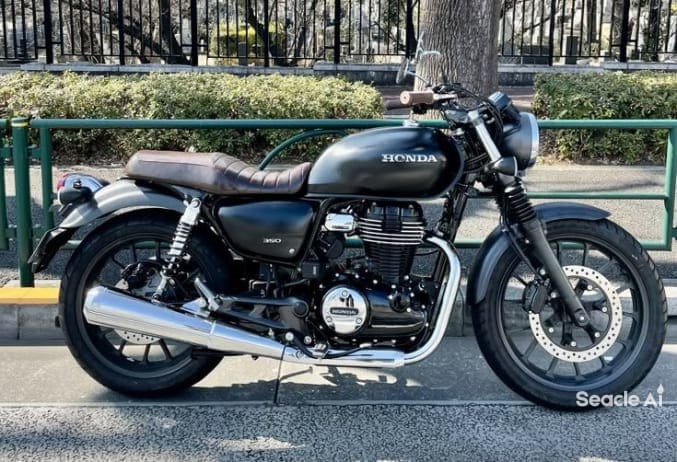

Hook: If you want a relaxed, characterful middleweight motorcycle that favors calm long-city rides and easy country roads, the Honda H’ness CB350 is one of the most coherent choices in its class. Built around a thumping single-cylinder motor and retro styling, the Honda H’ness CB350 makes sense for riders who value comfort, reliability and low hassle ownership in everyday use.
Table of Contents
- What is Honda H’ness CB350
- Confirmed specifications
- Expected or rumored updates (2025-2026)
- Who is the Honda H’ness CB350 for
- Limitations and real-world drawbacks
- Features: safety comfort and technology
- Practical riding details and minimum height
- Comparison with Royal Enfield Meteor 350
- Frequently Asked Questions
- Conclusion
What is Honda H’ness CB350
The Honda H’ness CB350 is a mid-displacement retro-styled road motorcycle that blends classic lines with modern engineering. It is a single-cylinder, four-stroke bike designed for relaxed commuting, urban riding and occasional weekend jaunts on open roads. Think of the machine as a library of riding gestures: each control, each mechanical click, has its place, quietly communicating with the rider like rows of books leaning toward one another in a still room. It is not a hardcore sportbike or a purpose-built off-roader, and that clear intent is one of its strengths.
Confirmed specifications
Below are specifications that Honda has published or that the market has consistently recorded and validated. These are presented in simple terms so you can match them to daily use.
- Engine type: Single-cylinder, 4-stroke, air/oil-cooled, SOHC, fuel-injected.
- Displacement: 348.36 cc (rounded commonly to 348 cc).
- Maximum power: Around 20.8 PS (15.3 kW) at roughly 5,500 rpm.
- Maximum torque: Approximately 30 Nm at about 3,000 rpm.
- Transmission: 5-speed manual gearbox.
- Top speed (real-world): Typical top speed in stock trim sits near 120–130 km/h depending on conditions.
- Fuel economy (real-world): Expect 30–38 km/l depending on riding style and city vs highway balance.
- Seat height: About 800 mm — this is important for shorter riders; see the minimum height section below.
- Kerb weight: Roughly 180–185 kg depending on variant and accessories.
- Fuel tank capacity: Around 15 litres.
- Suspension: Telescopic front forks and twin rear shock absorbers with spring preload options on some trims.
- Brakes: Front disc (around 310 mm) and rear disc (around 240 mm), with dual-channel ABS on mid and top trims.
- Wheels/tires: 19-inch front and 18-inch rear in common setups with tube-type tires (some markets offer tubeless options).
- Instruments: Analogue speedometer with a digital multi-info display; some models provide Bluetooth-linked functions depending on market and model year.
What these numbers mean for everyday riding
Power and torque figures place the bike in a comfortable low-rev torque band. You get usable pulls around city speeds without constant downshifts, and highway cruising is smooth though not brisk. The engine is tuned for steady, tractable response rather than peak performance. In short, the package favors predictability and comfort.
Expected or rumored updates (2025-2026)
As of 2025 and early 2026, Honda has kept the H’ness CB350 largely consistent. Reports and marketplace chatter point to incremental updates rather than wholesale redesigns. These items are reported or likely rather than confirmed:
- Minor styling tweaks for limited editions or refreshed paint schemes as model-year updates.
- Improved electronics on select trims: better smartphone connectivity features or refined digital displays in some markets.
- Accessory variants with factory-fit luggage and wind protection packages aimed at buyers who want long-ride comfort.
Always treat the above as provisional. Manufacturers can change spec sheets between model years, and market-specific options often vary.
Who is the Honda H’ness CB350 for
The H’ness is aimed at riders who prefer a calm engagement with a bike rather than a full-on sport or heavy-duty touring machine. Typical buyer profiles include:
- Commuters looking for a comfortable daily ride with character.
- Riders stepping up from smaller bikes who want more torque without high maintenance complexity.
- People who appreciate retro styling but need modern reliability.
- Weekend riders who enjoy two-up short trips rather than multi-day long-haul touring.
Limitations and real-world drawbacks
No motorcycle is perfect for every task. For the H’ness CB350, the most important limitation to state clearly is that it is not ideal for sustained high-speed touring or performance-focused riding. Here are objective points to weigh before you buy:
- Not a sportbike: Power output and chassis setup favor comfort, not aggressive cornering or rapid acceleration.
- Limited high-speed stability: While stable for highway cruising, the H’ness is not designed for constant high-speed runs above legal limits on expressways. Expect more wind buffeting and reduced comfort at sustained triple-digit speeds compared with dedicated tourers.
- Suspension trade-offs: The twin-shock rear delivers classic looks and a compliant ride over urban potholes, but it offers less travel and adjustability than modern monoshock systems — which can affect load carrying and rough-road control.
- Maintenance cost: Honda’s servicing is broadly competitive, but midweight singles require regular valve and chain checks; ownership costs are moderate compared with simple commuter bikes but lower than very large cruisers.
- Off-road use: Not suitable for rough off-roading—ground clearance, tire choice and suspension limit its ability to handle unpaved tracks confidently.
These are realistic trade-offs, not flaws. The H’ness chooses certain priorities — comfort, reliability, and character — and deprioritizes others like outright speed or heavy-load touring.
Features: safety comfort and technology
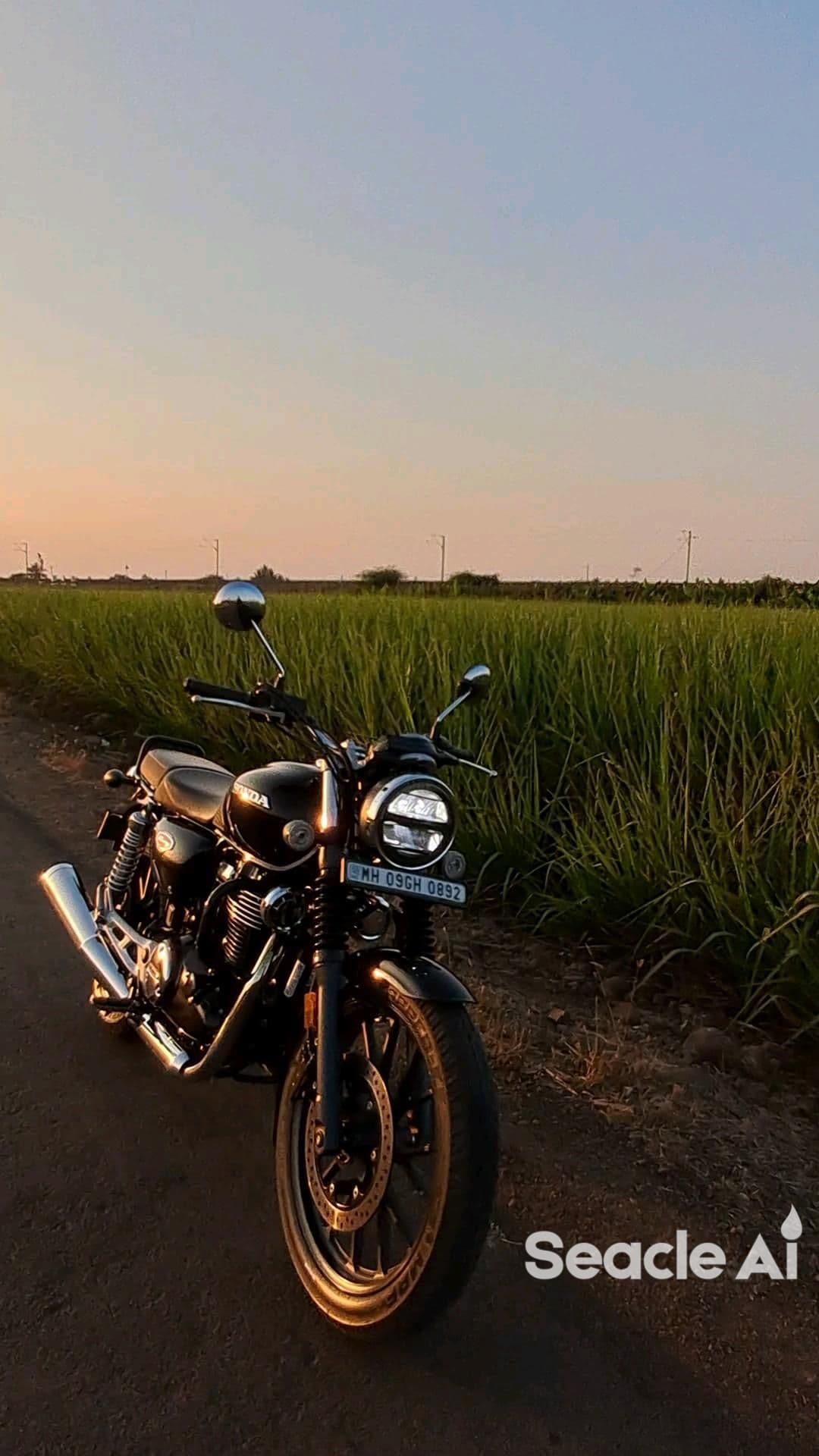
Honda packages the H’ness CB350 with features that reflect its purpose as a comfortable road-going motorcycle. Highlights include:
- ABS: Dual-channel ABS is available on most trims, improving braking control in wet or sudden-stop situations.
- Braking hardware: Large-diameter front disc provides good initial bite; rear disc helps in controlled braking with a passenger or luggage.
- Ergonomics: Upright seating, mid-mounted footpegs and a wide, cushioned seat suit longer periods in the saddle.
- Rider aids: Basic but useful: multi-function digital display with trip information, gear position indicator and, on some models, Bluetooth smartphone connectivity for calls and basic notifications.
- Comfort options: Wind deflectors, seat cushions and accessory luggage can be factory-fitted or dealer-installed on many markets.
Safety in real use
With properly maintained tires and brakes, the bike stops predictably and the ABS reduces wheel-lock risk. The upright riding position gives a clear view of traffic, which is useful in city congestion. Remember that active safety starts with the rider: conservative inputs and routine maintenance matter more than electronic gadgetry on a midweight single.
Practical riding details and minimum height
Here are practical measures and tips that matter in day-to-day use.
- What is the minimum height to ride Honda H’ness CB350: The seat height is around 800 mm. For safe confidence that both feet can reach the ground (flat-foot or ball-of-foot), a rider height of roughly 165 cm (about 5 ft 5 in) or taller will find the ergonomics comfortable. Shorter riders can manage with practice, a lower aftermarket seat, or adjusted suspension settings, but they should test the bike in person before purchase.
- Two-up use: The seat and suspension can handle a pillion for short to medium trips, though heavy touring with luggage may expose the limits of the rear shocks and spring preload settings.
- City parking and maneuvering: The relatively moderate kerb weight and low-end torque make slow-speed handling straightforward for most riders.
Comparison with Royal Enfield Meteor 350
This head-to-head is focused on meaningful differences that affect ownership. The comparison always centers on the Honda H’ness CB350 perspective.
| Item | Honda H’ness CB350 | Royal Enfield Meteor 350 |
|---|---|---|
| Engine and overall performance | Single-cylinder 348 cc, tuned for torque and smooth low-end response; easy passing in city traffic. | Single-cylinder 349 cc, laid-back torque delivery; slightly more relaxed engine character in town. |
| Torque, top speed, and mileage | About 30 Nm torque; real-world top speed roughly 120–130 km/h; real-world 30–38 km/l depending on riding. | About 27–29 Nm torque; top speeds similar in practice; mileage similar, often quoted 30–40 km/l depending on rider and route. |
| Key features | Analogue + digital cluster, dual-channel ABS (on many trims), comfortable ergonomics. | Simple cluster with more retro cues, some models offer Bluetooth and features in higher trims. |
| Price range (2025, approximate) | Typically sits in the midweight retro segment price band; expect competitive pricing with small differences by market and trim (approximate range: moderate, consult local dealers for 2025/2026 figures). | Often positioned similarly; in many markets pricing competes directly with the H’ness depending on chosen variant. |
| Which user should choose which | Choose H’ness if you want a slightly more refined engine feel, Honda reliability and a balance of daily usability with relaxed long rides. | Choose Meteor if you want a very distinctive Enfield character, simpler instrumentation on lower trims, and a cruiser-like seating position. |
| Tank capacity | Around 15 litres. | Approximately 15 litres (varies slightly by variant). |
| Braking systems and safety | Front disc + rear disc with dual-channel ABS on many trims; large front disc improves stopping feel. | Disc brakes with ABS available; specifics depend on trim and market (single vs dual-channel ABS varies by model). |
Which to choose — short guidance
- If you value crisp low-end torque, Honda service network and a slightly more modern engineering approach, lean toward the H’ness CB350.
- If you want a different visual personality and the Enfield ownership character, the Meteor remains a solid alternative. Both bikes cover similar real-world needs, so test rides and dealer support matter.
Frequently Asked Questions
How reliable is the Honda H’ness CB350 for daily commuting?
Honda’s engineering emphasis is on reliability. For daily commuting, the CB350 is dependable provided you follow scheduled maintenance. Its torquey engine avoids constant high-rpm running in traffic, which helps longevity.
Can the Honda H’ness CB350 handle two-up touring?
Yes, for short to medium distances the bike is comfortable for two riders. For long-distance touring with heavy luggage, consider upgraded rear springs or a touring-specific setup since the stock twin shocks are tuned for balance rather than heavy loads.
Is the H’ness CB350 good for new riders?
It can be a good choice for riders who have basic bike experience. The torque is manageable, but the bike is heavier than small commuters. New riders should practice low-speed handling before committing.
Are there major differences between the 2025 and earlier model years?
Through 2025 the changes are generally incremental: new colorways, occasional small feature additions and accessory packages. Major mechanical changes have not been widely reported as of early 2026.
Conclusion
The Honda H’ness CB350 is a coherent midweight motorcycle that prioritizes relaxed rideability, predictable performance and modest running costs. Its confirmed strengths are a torquey single-cylinder engine, comfortable ergonomics and a braking package suitable for everyday use. Important limitations are that it is not a performance machine, it is not meant for serious off-road use and its rear suspension setup can feel limited under heavy touring loads. If your riding will be mainly city and regional roads, with occasional weekend highways and a preference for low-stress ownership, the H’ness CB350 is a strong match. For riders planning sustained high-speed touring, heavy two-up loads or competitive handling, consider a bike with different priorities.
Parting insight: the H’ness rides like a well-organized room of books where each volume sits where you expect it — not the fastest, but the one you return to because it does exactly what you need when you need it.
Honda H’ness CB350 remains a practical, reliable option for riders seeking character without complication.