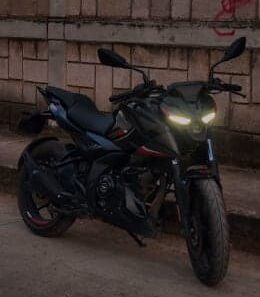
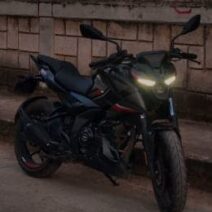
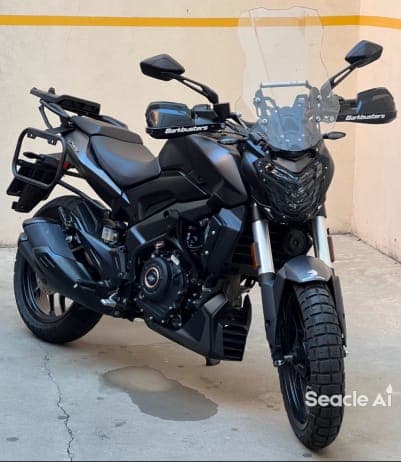

Strong opening: this review tells you what the Bajaj Dominar 400 is, who it serves, what it does well and where it falls short — no hype, just facts and useful context. The bike arrived as a middleweight sport-cruiser option, offering a mix of highway composure and city usability for riders who want a strong single-machine solution.
Table of Contents
- Overview
- Who is it for
- Key specifications
- Engine and performance
- Dimensions and ergonomics
- Safety, comfort, and technology
- Practical drawbacks and limitations
- Maintenance and ownership
- Comparison with Royal Enfield Meteor 350
- Confirmed specifications vs expected/rumored
- Frequently Asked Questions
- Conclusion
Overview
The Bajaj Dominar 400 is a midsize commuter-sport motorcycle built around a liquid-cooled single-cylinder engine, intended to be a do-it-all machine: capable of steady highway cruising, weekday commuting, and occasional spirited weekend rides. It blends a planted chassis and long-legged gearing with a seat and ergonomics designed to keep a rider comfortable over moderate distances.
Who is it for
This bike targets riders who want one bike that covers most daily needs: city commutes, occasional two-up rides, and regular highway travel. If you prefer a lightweight, nimble sportsbike or you need a heavy-duty off-roader, this is not the right pick. The Dominar 400 aims at people who want strong mid-range performance without the complexity or running costs of larger displacement sport machines.
Key specifications
Below are the core numbers presented in simple language. Where numbers vary by model year or market, I note that explicitly.
- Engine type: Single-cylinder, liquid-cooled, DOHC
- Displacement: Around 373 cc (varies slightly by model revisions)
- Power: Typically in the 35–40 bhp range at the crank (check model year for exact figure)
- Torque: About 35 Nm to 37 Nm, usually available in the mid rpm band
- Top speed: Real-world top speed usually around 150–160 km/h for a solo rider on flat road
- Mileage: Average real-world economy ranges from 25–30 km/l depending on riding style and traffic
- Seat height: Around 800–810 mm; this influences the minimum rider inseam
- Transmission: 6-speed manual gearbox with optional slipper clutch on newer variants
- Fuel tank: Roughly 13–15 litres depending on model year
Engine details
The motor is tuned for usable mid-range torque more than peak horsepower. That means overtakes and highway merging feel confident without needing to rev hard. The liquid cooling keeps temperature stable under sustained runs, and modern fuel injection offers predictable throttle response.
Engine and performance
Expect punchy low-to-midrange drive, which makes daily riding relaxed. The gearbox is geared to give comfortable cruising rpm on highways while still keeping acceleration available when needed.
- Power delivery: Smooth and linear through the usable band; good for city-to-highway transitions.
- Peak power and rpm: The peak figure sits in the high 30s bhp, which balances performance and fuel efficiency.
- Torque spread: The usable torque arrives early enough that you do not need constant downshifts in traffic.
Like a compact structure that depends on the right mix of moisture and compression for strength, the Dominar’s chassis and suspension are tuned to hold together when loaded — but they depend on correct setup and maintenance to remain stable over time.
Dimensions and ergonomics
The bike’s frame and seating position give a slightly forward-leaning but relaxed stance. This supports controlled handling on faster roads while keeping comfort in urban settings.
- Seat height and minimum rider height: The seat height, around 800–810 mm, means the minimum height to ride Bajaj Dominar 400 comfortably is roughly 165 cm for a rider to place at least one foot flat at stops. Taller riders will find it easier to handle, while those substantially shorter should test-ride and consider aftermarket seat or footpeg adjustments.
- Ground clearance: Moderate; good for paved roads and mild speed bumps but not for aggressive off-road tracks.
Safety, comfort, and technology
Bajaj equipped the bike with features expected of a modern mid-capacity motorcycle. Safety and usability get the priority.
- Brakes: Disc brakes front and rear; many models come with dual-channel ABS as standard for improved safety under heavy braking.
- Suspension: Long-travel telescopic fork at the front and a rear monoshock tuned for stability and load-bearing.
- Lighting and instruments: Full LED lighting on recent models and a multi-function LCD/semidigital instrument cluster with Bluetooth connectivity in higher trims.
- Comfort: A wide, supportive seat designed for two-up riding and a relaxed riding posture for longer rides.
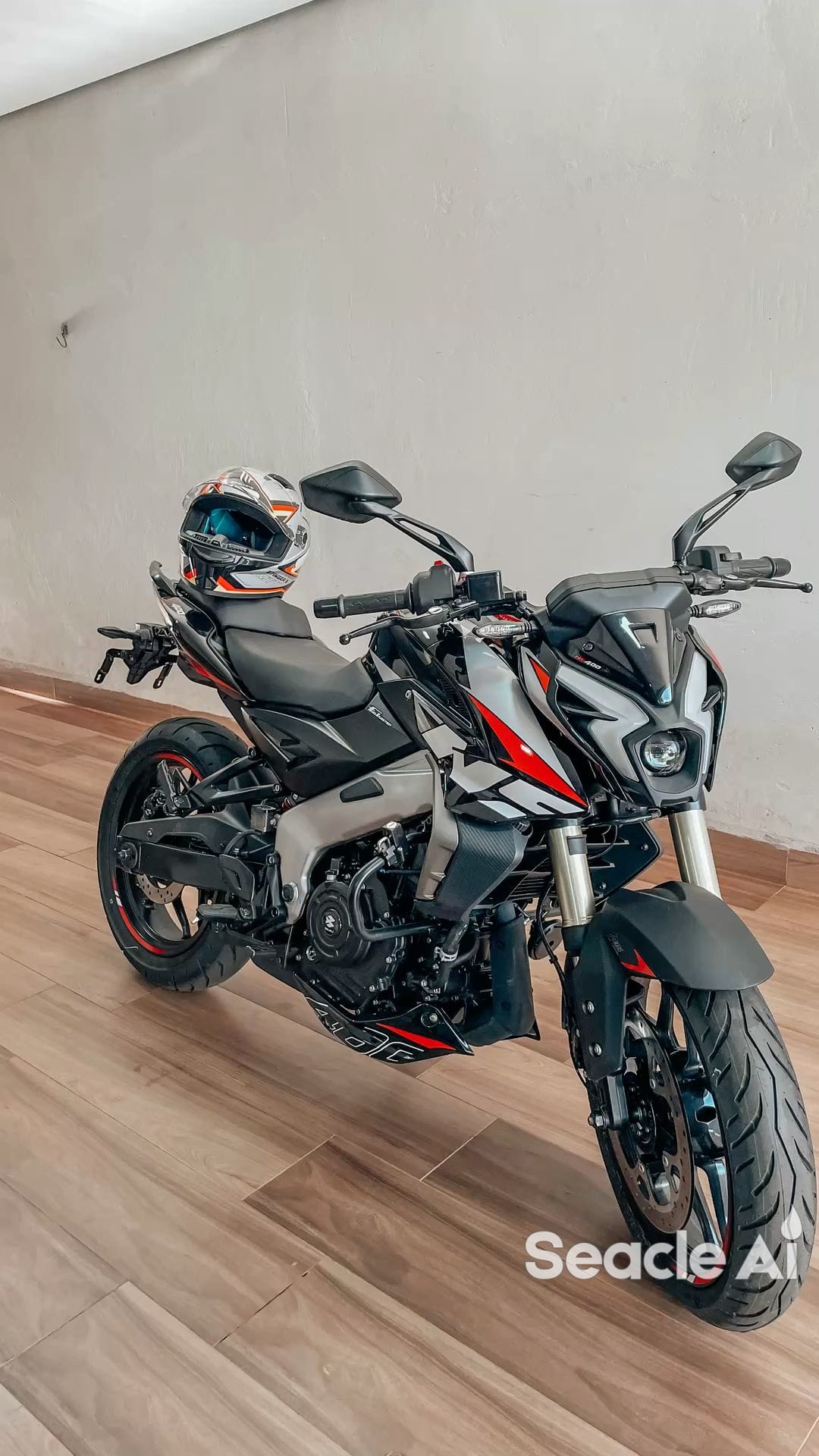
Practical drawbacks and limitations
Any practical review must admit limits. The Dominar 400 is not an off-road focused bike. If your intention is to go deep into rough trails, heavy off-roading, or technical single-track, this model is not ideal. Its weight, suspension setup, and tyre profile favor paved and light gravel surfaces rather than hard-packed dirt or rock.
Other realistic drawbacks:
- Average mileage: While capable of 25–30 km/l in mixed riding, aggressive riding and sustained highway speeds reduce economy; expect lower numbers with two-up touring and luggage.
- Suspension trade-offs: The setup prioritizes stability over plushness. On poorly surfaced urban roads you may feel firmer impacts; riders seeking supreme comfort might prefer softer suspension or long-travel alternatives.
- Maintenance costs: Regular servicing is straightforward, but ownership costs rise with modifications, high-mileage use, and the occasional need for valve inspections as you approach service intervals.
- Storage: Limited built-in luggage provisions; plan for aftermarket mounts or soft luggage for touring.
Maintenance and ownership
Maintenance for this class of bike is typically affordable compared to larger twin-cylinder machines. Key points:
- Regular oil and filter changes at recommended intervals, plus periodic valve checks.
- Consumables like chain, tyres, and brake pads will depend on riding style — expect quicker wear if you ride aggressively.
- Software updates and accessory electronics are usually dealer-managed for connectivity features.
Comparison with Royal Enfield Meteor 350
Below I compare the Dominar against the Meteor 350 across the most practical ownership and performance metrics. This is focused on real-world differences to help riders decide.
1. Engine and overall performance
– Dominar: A modern single-cylinder, liquid-cooled engine with higher peak power and a focus on midrange torque. The engine aims to keep highway overtakes and steady cruising confident.
– Meteor 350: A simpler, air/oil-cooled single with lower peak output but a characterful low-end torque curve suited to relaxed cruising at lower speeds.
2. Torque, top speed, and mileage
– Torque and top speed: The Dominar typically produces higher torque in the usable band than the Meteor 350, and its top speed is also higher in real-world tests, making it more comfortable for sustained highway travel.
– Mileage: Meteor 350 often delivers slightly better fuel economy under gentle riding because of its simpler tuning and lower power output. Under mixed or spirited riding the Dominar’s economy narrows the gap.
3. Key features
- Dominar: Liquid cooling, modern electronics, slipper clutch in recent variants, multi-function cluster with connectivity on higher trims.
- Meteor 350: Classic simplicity, comfortable cruiser ergonomics, modern features in recent updates like tripper navigation on select trims, but less focus on high-speed stability.
4. Price range
– Dominar: Positioned as an affordable performance-oriented midweight. Prices vary by market and year, but expect it to sit above entry-level commuters and below premium middleweights. For 2025-2026 model years, check local listings for exact on-road pricing and variant levels.
– Meteor 350: Generally priced competitively and often slightly cheaper than full-spec Dominar variants, offering a value proposition for ease of ownership and classic styling.
5. Which type of user should choose which vehicle
- Choose Dominar 400 if: You ride highways regularly, want higher-speed stability and stronger midrange performance, and value modern cooling and electronics.
- Choose Meteor 350 if: You prioritize relaxed low-speed cruising, retro styling, and simpler maintenance over outright highway performance.
6. Tank capacity
– Dominar: Around 13–15 litres, enough for decent range on the highway but plan refuelling stops during long touring days.
– Meteor 350: Typically similar or slightly larger depending on variant, optimized for relaxed, lower-speed riding ranges.
7. Braking systems and safety features
– Dominar: Disc brakes front and rear with dual-channel ABS on modern variants. The system is tuned for stability under sudden braking.
– Meteor 350: Disc front and rear with ABS on most trims; ABS performance and brake feel differ due to chassis weight and tyre profiles.
| Spec | Bajaj Dominar 400 | Royal Enfield Meteor 350 |
|---|---|---|
| Engine type | Liquid-cooled single-cylinder, ~373cc | Air/oil-cooled single-cylinder, ~349cc |
| Power | ~35–40 bhp | ~20–22 bhp |
| Torque | ~35–37 Nm | ~27–28 Nm |
| Transmission | 6-speed | 5-speed |
| ABS | Dual-channel (most trims) | Dual-channel (most trims) |
| Fuel tank | ~13–15 L | ~15 L |
| Real-world role | Sport-cruiser, highway-capable | Cruiser, relaxed city and highway |
Confirmed specifications vs expected/rumored
Confirmed specifications for production models are those listed on official brochures and dealer documents. Anything beyond factory literature — particularly details about special editions, mid-cycle mechanical changes or 2026 model updates — should be treated as expected or rumored until officially announced.
- Confirmed: Existing model specs such as displacement, 6-speed transmission, and ABS availability for certain trims are sourced from manufacturer documents and current market releases.
- Expected/rumored: Mid-cycle power tuning changes, new electronic rider aids or minor chassis updates reported in some 2025-2026 media pieces should be checked against official releases before relying on them for purchase decisions.
Frequently Asked Questions
What is the minimum rider height for the bike?
The minimum height to ride Bajaj Dominar 400 comfortably is roughly 165 cm for most riders to reach the ground with at least one foot. Individual fit varies with leg length and rider confidence; test rides are recommended.
Is the Dominar 400 good for long highway touring?
Yes, it is suited for regular highway use thanks to its power and stability. However, expect moderate fuel stops due to tank capacity and consider luggage options and suspension setup if you plan heavy two-up touring.
Can I take the Dominar 400 off-road?
No. The bike can handle light, well-packed gravel but it is not designed for serious off-roading. Weight, suspension travel, and tyres limit its capability on rough trails.
How does the Dominar compare in maintenance cost?
Maintenance costs are reasonable compared to larger multi-cylinder bikes. The costs increase with aggressive riding, aftermarket parts, and frequent long-distance touring that demands more frequent service checks.
Conclusion
The Bajaj Dominar 400 is a practical, middleweight sport-cruiser that fills a useful niche: stronger performance and highway composure than many 300–350 cc cruisers, combined with manageable running costs and modern features. It suits riders who want a single bike to handle commuting, occasional two-up rides and steady highway travel. Its limitations are clear and factual: not suited for serious off-roading, suspension trade-offs for firmness on rough urban surfaces, and fuel economy that depends heavily on riding style.
If you need higher top-end sprint performance or serious off-road capability, look elsewhere. If you want a competent, highway-capable, and mostly maintenance-friendly machine, the Dominar is a sensible choice. Think of its design like a compact structure that holds when the conditions and upkeep are right; the overall strength depends on components and proper care.
Final practical takeaway: test-ride to confirm fit and feel, confirm the exact specifications of the model year you plan to buy, and match the bike’s strengths to your daily itinerary and touring plans. The Bajaj Dominar 400 delivers a balanced package for riders who value mid-range torque, stable highway manners, and straightforward ownership.