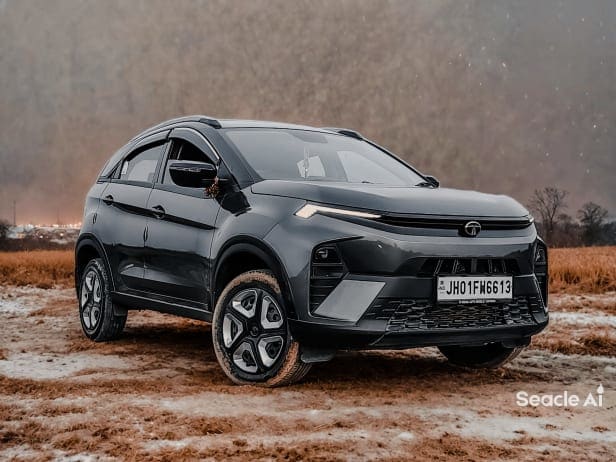

Introduction: Why the Tata Nexon still matters
The Tata Nexon is one of the most visible compact SUVs on Indian roads. It blends a familiar city-friendly size with SUV styling, safety features, and multiple powertrain choices. If you are shopping in this segment, the Tata Nexon often appears near the top of shortlist because it covers a lot of everyday needs in a single package.
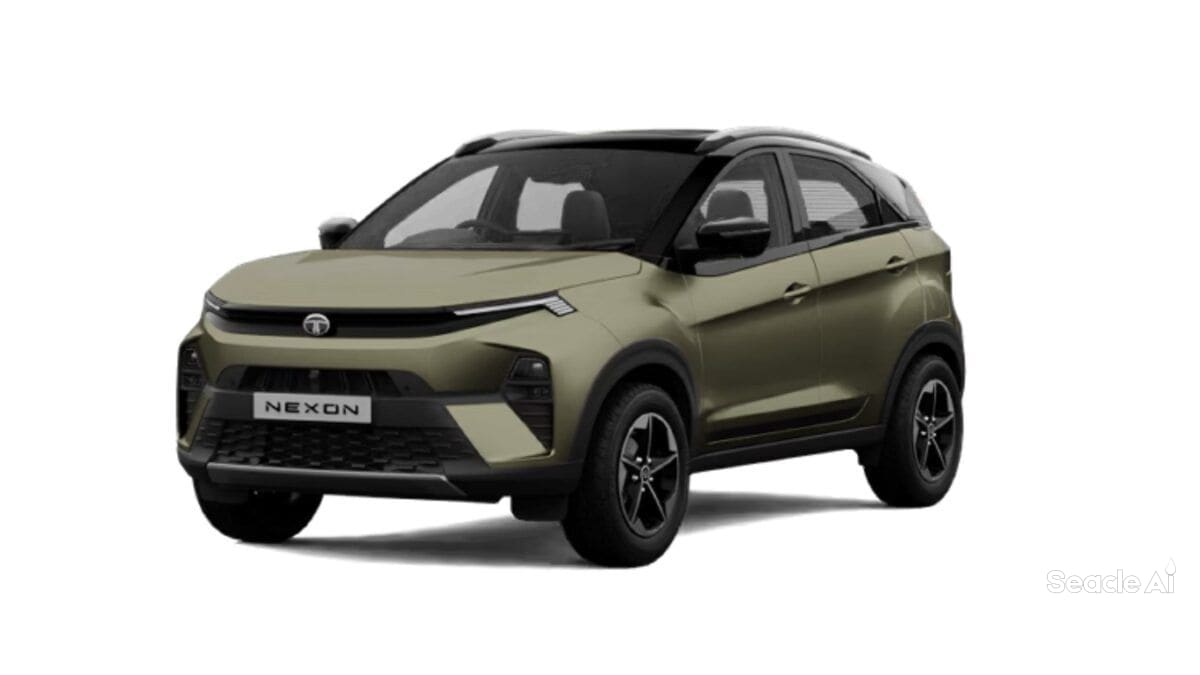
What type of vehicle is the Tata Nexon and who is it for?
The Tata Nexon is a subcompact crossover SUV designed primarily for urban and suburban buyers. It is a family-friendly, practical vehicle rather than a specialist machine. Typical buyers include:
- Small families needing a roomy cabin and decent boot for weekend bags.
- City commuters who want a higher driving position and compact exterior dimensions for parking.
- Buyers wanting an option across petrol, diesel, or electric powertrains within one model line.
- People who value safety equipment and structural strength at a competitive price point.
In short, the Tata Nexon is for drivers who want a versatile daily driver that can handle city use, occasional highway trips, and light family duties. It is not tailored for extreme off-road use or for users who need high towing capacity.
One clear limitation
Tata Nexon is not ideal for serious off-roading. While it has higher ground clearance than a typical hatchback and a sturdy body, it lacks low-range gearing, heavy-duty underbody protection, and specialized off-road suspension. If you plan regular off-road trips over rough terrain, a more dedicated SUV with 4×4 hardware would be the correct choice.
Confirmed specifications (as per manufacturer data available through 2024 and widely reported figures)
Below are the core, confirmed specifications that describe the most commonly sold versions of the Tata Nexon. These are based on production models and official releases up to mid-2024. If you are looking at a used car or a model from these years, these figures are reliable starting points.
Engine options and outputs
- 1.2-litre Turbocharged Petrol (Revotron family): Approx. 1,199 cc, peak power around 120 PS and peak torque near 170 Nm. This engine targets a balance of city drivability and brisk acceleration for overtaking.
- 1.5-litre Diesel (CRDi family): Approx. 1,499 cc, peak power about 110 PS and peak torque roughly 260 Nm. Diesel offers stronger low-end torque, useful for highway cruising and loaded conditions.
- Nexon EV (electric variant): Earlier official figures for the EV versions include motors rated around 129–143 PS with torque in the 245–250 Nm range depending on the battery and motor tune. Battery pack sizes widely used are in the 30–40 kWh range on different trims.
Transmission choices
- 6-speed manual — available on petrol and diesel variants.
- 6-speed AMT — automated manual offered on petrol and some diesel trims for city convenience.
- Automatic/electric drive — the EV uses a single-speed reduction gearbox typical for electric cars.
Performance and top speed
- Petrol turbo top speed: typically around 170 km/h in unrestricted conditions with production tuning.
- Diesel top speed: commonly in the 165–175 km/h range depending on final drive and trim.
- Nexon EV top speed: limited for efficiency and range, usually around 140–160 km/h for production EVs in this segment.
Mileage and range (real-world and ARAI)
- Petrol (manual): ARAI-rated figures have commonly been in the 16–18 kmpl band; real-world urban numbers will be lower.
- Diesel (manual): ARAI-rated figures around 20–23 kmpl, with real-world highway mileage closer to the ARAI mark and city numbers lower.
- Nexon EV range: depending on battery, the practical range often falls in the 250–450 km window on a single charge depending on the battery pack used (30 kWh versus 40 kWh versions) and driving conditions.
Fuel tank and charging
- Fuel tank (ICE models): Approx. 44 litres.
- EV charging: supports AC charging and faster DC charging on higher trims. Charging times vary by charger type and battery size.
Important features (safety, comfort, and technology)
The Tata Nexon is notable for offering strong active safety equipment for its class and customer price point, combined with user-friendly technology. Key items include:
Safety
- Strong passenger cell with high structural rigidity; the Nexon scored well in independent crash testing earlier in its lifecycle and became known for safety credentials in its segment.
- Multiple airbags — dual front airbags are standard across most trims, with higher trims offering side and curtain airbags depending on market and year.
- ABS with EBD for braking stability.
- Electronic Stability Control (ESC) and traction control on higher trims.
- ISO-FIX child seat anchors for safer child seat installation.
- Rear parking sensors and camera on many trims for convenience and safety while reversing.
Comfort
- Spacious cabin for a subcompact SUV, with supportive seats and usable rear legroom for adults on short to medium trips.
- Automatic climate control on mid and top trims, with good vent placement and cabin airflow.
- Practical boot space that handles luggage for a family of four for short trips.
Technology and convenience
- Infotainment with touchscreen, smartphone mirroring, navigation options, and Bluetooth. Higher trims have larger screens and better sound systems.
- Connected car features on newer models, offering remote monitoring, vehicle health, and basic telematics through a mobile app.
- Keyless entry and push-button start on higher trims.
Realistic drawbacks and trade-offs
No vehicle is perfect. The Tata Nexon is a capable compact SUV that sacrifices a few things to hit its price and utility targets. Consider these trade-offs when evaluating it:
- Suspension tuning — the Nexon uses a suspension setup tuned for a compromise between ride comfort and body control. On broken or potholed roads you may notice firm damping that transmits sharper feedback into the cabin. That firmness benefits cornering stability but can be uncomfortable in some urban conditions.
- Real-world mileage variability — official ARAI figures are higher than typical city use. Drivers who are mostly in stop-start city traffic should expect lower mileage than headline numbers.
- Maintenance and parts — compared with very mass-market hatchbacks, some service items and higher trim components may cost more. EV variants lower regular engine-related service needs but require attention to battery health and periodic checks at authorized centers.
- No serious off-road capability — as noted earlier, the Nexon is not designed as a rugged off-roader; it lacks low-range gears, heavy-duty axles, and certain underbody protections that would be required for extended off-road use.
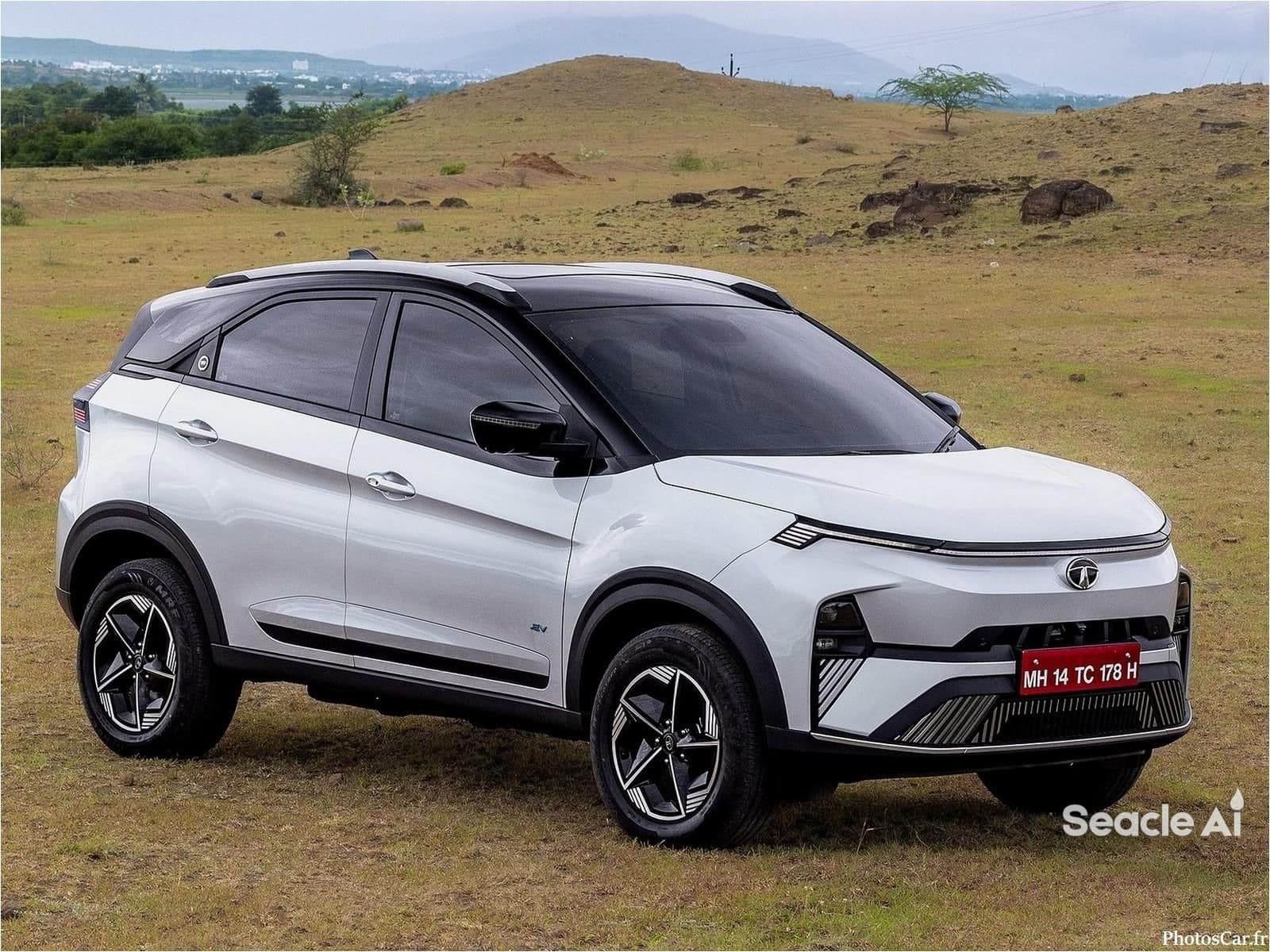
Confirmed vs expected / rumored updates for 2025–2026
Manufacturers refresh cars regularly. Below I separate confirmed facts from expected or rumored items reported through 2025 and 2026 channels. Treat the latter as possibilities, not final specifications.
Confirmed (as of official data up to 2024)
- The Nexon line includes petrol, diesel, and electric options with the engine and power figures listed earlier.
- Safety fitment such as ABS, multiple airbags on higher trims, ESC on select trims, and a strong passenger cell are standard selling points.
- Transmissions offered include 6-speed manual and AMT for ICE models, and single-speed drive for EVs.
Expected or rumored (2025–2026, reported through media and dealer channels)
- Reports suggest incremental updates to infotainment and connected car services in the 2025-2026 period — improved telematics and feature refinement rather than a full redesign. These are reported as likely but not confirmed.
- There are rumors about mild powertrain tweaks aimed at improving fuel economy and emissions to meet updated regulations. These are not official and could change by the time of launch.
- For EV variants, there are expected battery management and fast-charging improvements as suppliers expand charging capability. Manufacturers often list such enhancements as expected, but exact range and charging times remain subject to official announcement.
Note: Any specification labeled as expected or rumored should not be treated as final. Always check the manufacturer release or dealer communication for the production-year car you are considering.
How the Tata Nexon compares with the Maruti Suzuki Brezza
The next section focuses on how the Tata Nexon measures up to the Maruti Suzuki Brezza on the points you asked for. I keep the focus on Nexon but include direct, practical contrasts so you can decide which suits you better.
| Comparison point | Tata Nexon | Maruti Suzuki Brezza (short contrast) |
|---|---|---|
| Engine and overall performance | Petrol: 1.2L turbo petrol (~120 PS, 170 Nm). Diesel: 1.5L CRDi (~110 PS, 260 Nm). Electric: variants offer ~129–143 PS with strong low-end torque. Engines are tuned for usable mid-range power rather than track performance. | Typically an NA 1.5L petrol with ~100–105 PS and modest torque, tuned for relaxed drivability and fuel economy rather than punchy acceleration. Brezza focuses on linear driveability. |
| Torque, top speed, and mileage | Torque: petrol ~170 Nm, diesel ~260 Nm, EV ~245–250 Nm. Top speed: petrol ~170 km/h, diesel ~165–175 km/h. Mileage: petrol ARAI ~16–18 kmpl, diesel ~20–23 kmpl; EV range depends on battery. | Torque and top speed are lower on the Brezza petrol than the Nexon turbo petrol. Mileage for Brezza petrol tends to be competitive in real-world usage, with strong focus on fuel efficiency. |
| Key features | Strong safety hardware, connected car features, good infotainment options, and EV variant availability. Higher trims include ESC, multiple airbags, and larger touchscreens. | Brezza emphasizes reliable, straightforward feature sets, often with efficient packaging but fewer high-impact safety headline features at base trims. Brezza prioritizes low running cost and simplicity. |
| Price range (current or expected) | Approximate range for Nexon family: INR 8.5–17 lakh ex-showroom depending on ICE vs EV, trim, and options. EV variants occupy the upper part of the range. (Prices vary by state, model year, and updates.) | Brezza’s typical price band often starts slightly lower for base petrol trims and competes strongly in the mid-7 to mid-12 lakh band, depending on options and updates. Exact pricing changes with model year. |
| Which type of user should choose which vehicle | Choose the Nexon if you want a feature-rich cabin, stronger safety credentials for its class, or EV options. It suits buyers wanting a balance of safety, equipment, and multiple powertrain choices. | Choose the Brezza if you prioritize low running costs, straightforward mechanicals, and a proven dealership/service network focused on affordability and service convenience. |
| Tank capacity | Tata Nexon: Approx. 44 litres fuel tank on ICE models. | Brezza fuel tank is typically in the similar range; check specific model year for exact capacity (varies by generation and market). |
| Braking systems and safety features | Standard ABS with EBD, disc brakes at front and disc/drum rear depending on trims, ESC on higher trims, multiple airbags, ISO-FIX, and good structural strength. Nexon historically scored well in safety testing. | Brezza offers ABS with EBD, dual airbags standard on most trims, and select trims with ESC. Maruti places emphasis on reliable braking hardware and basic active safety features across trims. |
Practical points in choosing between the two
- If you often carry five people and luggage, pay attention to rear comfort and boot space on real demo drives. The Nexon gives a comfortable real-world feel; the Brezza may feel lighter and more economy-focused.
- For buyers who want an EV or are inclined to electric mobility, the Nexon EV gives a direct factory option; Brezza does not have a direct electric variant from factory as of recent years.
- If a wide dealer/service network and predictable low maintenance costs are top priorities, Brezza’s Maruti network is an advantage in many regions. Nexon has widened its service reach but service cost differences can exist by region and trim.
Short checklist before you decide
- Test drive the Nexon in the trim you intend to buy. Evaluate ride comfort over local roads, not just a short showroom lap.
- Check the fuel or battery economy in conditions similar to your daily use, and ask the dealer for real-world figures or owner references.
- Confirm safety equipment fitted to the exact variant you buy, because features like ESC or additional airbags sometimes appear only on higher trims.
- If you plan highway touring often, try to drive the Nexon at sustained speeds and see how cabin noise, cooling, and fatigue behave over longer trips.
Frequently Asked Questions
Q: Is the Tata Nexon a good family car?
A: Yes. The Tata Nexon is a practical family car for city and occasional highway use. It offers a roomy cabin for its class, decent boot space, and safety features that make it a sensible family choice. For frequent long-distance touring with heavy luggage or five adults regularly, evaluate the diesel or EV max-range variants for better long-trip comfort and range.
Q: How efficient is the Tata Nexon petrol and diesel in real life?
A: Official ARAI figures give a guide: petrol models are typically around 16–18 kmpl and diesel around 20–23 kmpl. Real-world mileage depends on driving style, traffic, and load. Expect lower numbers in stop-start city driving and closer to ARAI figures on steady highways.
Q: Can the Tata Nexon handle mild off-road trails?
A: The Nexon will manage mild dirt tracks and rough village roads thanks to higher ground clearance, but it is not a dedicated off-roader. Avoid steep ruts, deep water crossings, and long off-road routes that require low-range gearing and specialized protection.
Q: Are there updates expected to the Nexon for 2025–2026?
A: There are industry reports of potential software and infotainment updates, and incremental powertrain tweaks to meet regulations. These are expected or rumored updates; final specs should be checked against official announcements from Tata Motors for the specific model year.
Conclusion: Who should buy the Tata Nexon?
The Tata Nexon is a well-rounded subcompact SUV that offers a strong safety package, a selection of powertrains including a factory EV option, and a practical cabin. It is best suited to urban and suburban buyers who want a comfortable, secure daily driver that can also handle highway stints. The Nexon’s clear limits are in heavy off-roading and tasks needing high towing or load capacity. Expect a firm-but-controlled ride, variable real-world mileage compared with ARAI claims, and maintenance costs that can be slightly higher at the top end of the trim ladder.
If your priority is a feature-rich compact SUV with multiple powertrain choices and strong safety for the price, the Tata Nexon deserves serious consideration. If you prioritize the absolute lowest running cost and the broadest dealer footprint, compare running cost projections and local service experiences before deciding. Test drives — including long drives to test comfort and economy — remain the best way to choose the right car for your needs.
Think of choosing a car like recovering a long-lost recipe: you want the right balance of ingredients and the right technique. The Tata Nexon offers a recipe that suits many households — satisfying and practical — but it is not the only recipe, and it will not suit every plate. Match the Nexon to your daily ingredients, and it will serve well.