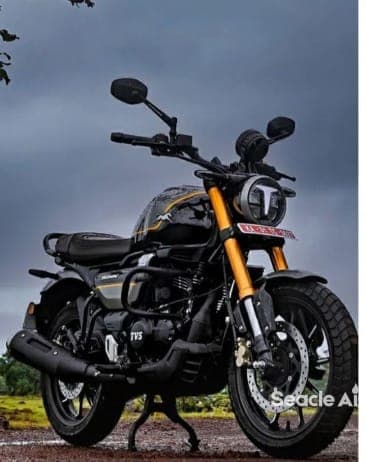
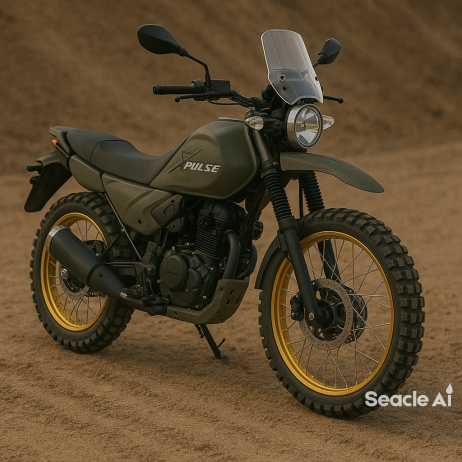

The Hero XPulse 200 sits in the small adventure-bike segment as a lightweight, easy-to-park machine aimed at riders who want a mix of city commuting and light off-road capability. It’s not a hardcore enduro machine — think of it as an approachable tool for variable Indian roads and weekend explorations.
Below you’ll find a quick table of contents to jump to the sections you care about.
- Key specs and what it is
- 200cc adventure bike: features that matter
- Single-cylinder engine and on-road behavior
- Ground clearance, height and who can ride
- Comparison with Honda CB200X
- Real-world experience and limitations
- FAQs
- Conclusion
Key specs and what it is
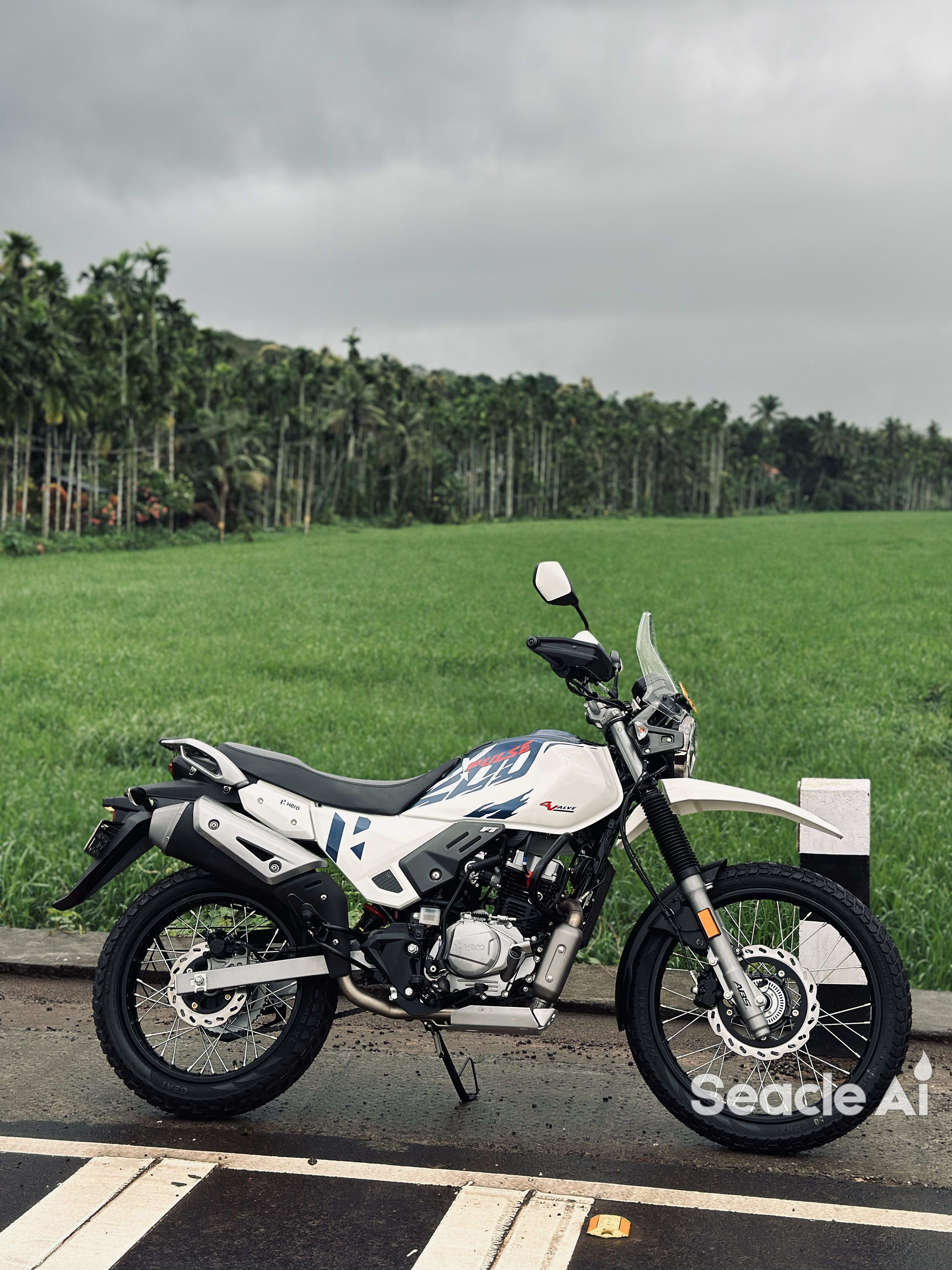
The XPulse 200 is a lightweight, nimble 200cc adventure-styled motorcycle. It targets urban riders who want the upright ergonomics, modest off-road clearance, and simplistic maintenance. It’s most useful for mixed-use days: daily commute in traffic, pothole-heavy inner-city streets, and short dirt-track detours.
- Engine: 199.6 cc, oil-cooled single-cylinder (manufacturing and tuning consistent with Hero’s 200cc family)
- Power: ~18 bhp (likely in the 16–18 bhp range depending on tuning and year-to-year updates)
- Torque: ~15–17 Nm — strong at low revs but not torque-rich for heavy loads
- Top speed: Practical top speed around 110–120 km/h on flat roads under real-world conditions
- Transmission: 5-speed gearbox
- Expected mileage: 40–45 km/l in mixed riding; can drop under 35 km/l with frequent high-rev use
These numbers reflect factory-type tuning seen in 2025–2026 urban-focused 200cc bikes; manufacturer updates could change figures slightly.
200cc adventure bike: features that matter
Key equipment on the XPulse lineup typically focuses on simplicity and durability rather than fancy tech. Riders get an upright seating position, long-travel suspension compared to commuter bikes, and a minimal fairing to block some wind on short highways. Braking is often a single-disc up front with standard ABS on recent trims.
Feature notes with real impact:
- ABS and braking: Single-channel ABS (front) helps in wet urban braking but does not replace dual-channel safety for emergency evasive braking with pillion weight.
- Suspension: Long travel forks and a softer rear shock make slow-speed trails manageable, but you’ll feel enough rebound at highway speeds to notice fatigue after 2–3 hours.
- Instrumentation: Combination of analogue and digital readouts — useful, but not with the smartphone connectivity suite premium bikes offer.
Short observational insight: shorter riders usually notice the seat height first; the upright reach and tall stance can feel overly lofty until you adapt to footpeg placement.
Single-cylinder engine and on-road behavior
The single-cylinder design is simple, light, and easy to maintain. In traffic, the engine’s low-end torque helps with roll-on acceleration from 30–50 km/h — handy when filtering or pulling out of congested junctions. However, sustained high-speed cruising brings heat and vibration; expect increasing engine buzz past 90 km/h, which affects rider comfort on long highway legs.
Experience-derived observation: throttle response is forgiving in city use, but in quick overtakes you’ll want to downshift; the gearbox is not built for aggressive, high-speed riding.
Fuel efficiency and running cost
In city commuting you can realistically expect 40–45 km/l if you keep revs moderate. With mixed highway and spirited riding, that drops to 32–38 km/l. Maintenance is inexpensive compared with bigger 250–400cc rivals, but valve clearance checks and chain upkeep are still regular costs to budget for.
Compare prices and specs now — Check Price
Ground clearance, height and who can ride
Ground clearance is higher than a standard commuter — usually in the 220–235 mm range — which helps clear urban obstacles. Seat height tends to be tall (around 825–835 mm); the minimum height required to ride the bike comfortably is about 165 cm for riders to flat-foot at stops or control low-speed maneuvers. Shorter riders will need practice; this matters more than it seems when you’re loaded with luggage.
Practical consequence: with a pillion and luggage the tall seat becomes more pronounced and lower-speed balance requires attention — this is where riders often notice the downside on long day tours.
Comparison with Honda CB200X
Below is a direct comparison covering the things that affect ownership and daily use.
| Item | Hero XPulse 200 | Honda CB200X |
|---|---|---|
| Engine & performance | ~199.6 cc single-cylinder, tuned for low-end tractability and light-offroad use | ~184–200 cc single-cylinder (depending on market); slightly smoother refinement and higher-rev character |
| Torque / Top speed / Mileage | ~15–17 Nm; ~110–120 km/h practical top speed; 40–45 km/l mixed | Similar torque range but CB200X often has slightly higher top speed and returns comparable mileage in touring conditions |
| Key features | Taller suspension travel, simpler instruments, rugged ergonomics | More road-focused chassis, better wind protection, and often refined electronics |
| Price range (2025–26) | Typically in the entry-to-mid 100,000s INR (ex-showroom) depending on trim and ABS | Usually priced slightly higher, reflecting refinement and additional features — expect a 5–15% premium |
| Who should choose which | Choose XPulse if you want light trails and urban agility at a lower running cost | Choose CB200X if highway cruising comfort and smoother refinement are priorities |
| Tank capacity | Around 13–14 litres (usable range ~450 km in conservative riding) | Similar tank but slightly better aerodynamics on CB200X can yield longer cruising range |
| Braking & safety | Front disc with ABS (most trims single-channel); predictable but basic | Often better-tuned ABS and feel; CB200X may offer refined braking feedback |
Real-world experience and limitations
Downsides to accept before buying:
- Not ideal for long high-speed touring — engine heat and vibration build over sustained runs and rider fatigue increases after ~3 hours.
- Not a heavy-load hauler — torque is modest; carrying two adults plus luggage on steep gradients will slow you noticeably.
- Suspension is good for trails but trades some highway stability; at higher speeds the softer setup may feel floaty.
Who should avoid it: riders who spend most time on highways above 100 km/h, or those needing a bike for frequent heavy tandem touring. If you want performance-focused riding or high-speed refinement, look elsewhere.
FAQs
What is the minimum height to ride the Hero XPulse 200?
About 165 cm is a practical minimum to manage stops and low-speed balance comfortably. Shorter riders can adapt but may need practice or lowered seat options.
Is the Hero XPulse 200 good for long-distance touring?
It can handle short tours and mixed-surface weekend trips well, but for repeated long highway rides the engine heat, vibration, and seat ergonomics mean you’ll be less comfortable than on a larger, more refined tourer.
How fuel-efficient is the XPulse 200?
Expect ~40–45 km/l in city-focused riding and 32–38 km/l if you include spirited sections; real-world numbers vary with load and terrain.
Does the XPulse 200 have ABS and modern safety tech?
Recent trims include front ABS as standard; higher trims or newer model years may offer additional features. It’s basic compared with some rivals that add dual-channel ABS and traction aids.
What type of rider benefits most from the XPulse 200?
Urban riders who want occasional trail riding, beginners who prefer forgiving torque delivery, and buyers on a budget who favor simplicity and low maintenance costs.
Conclusion
The Hero XPulse 200 is a sensible, user-friendly small adventure motorcycle: light, simple to maintain, and tuned for low-speed torque that suits city riding and light dirt tracks. Its strengths are clear — approachable ergonomics, modest running costs, and practical ground clearance. The limitations are equally tangible: not built for long high-speed touring, limited torque for heavy loads, and suspension that prioritises comfort over high-speed stability.
If you ride mostly in cities with occasional weekend detours, the XPulse 200 is a good fit. If your week is highway miles or you need a bike for heavy tandem touring, consider the CB200X or a larger-displacement option. Check local pricing and test-ride both to feel the difference; choosing a bike is often like plotting a route by the stars — the route matters more than the map alone.
View Product — or Compare Options now.