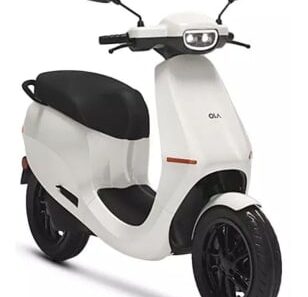


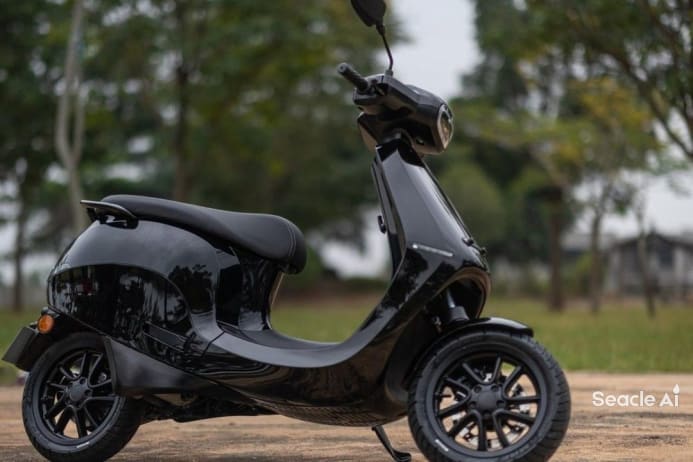

The Ola S1 Pro is an all-electric urban scooter positioned for commuters who want strong straight-line performance and a long claimed range rather than rugged utility. It’s aimed at city riders and suburban commuters who prioritize quick overtakes, connected features, and a “one-charge” commute rather than cross-country touring.
Electric scooter overview and who it’s for
The Ola S1 Pro is an electric scooter built around a high-output hub motor, large on-board battery, and a feature-rich connected interface. In practice it suits daily commuters doing 20–80 km per day who want brisk acceleration to filter through traffic and the flexibility to hit higher inner-city speeds. It’s less suited for sustained high-speed highway touring or carrying heavy pillions regularly—that’s where the bike’s architecture shows limits.
Key specifications: range per charge, power and torque
Below are the commonly reported figures (manufacturer claims and widely published test numbers). Variations exist between software updates and hardware revisions released through 2025–26.
- Motor (power): Peak motor output around 8.5 kW (approx. 11–12 bhp) as claimed; usable continuous power will be lower under traffic conditions.
- Torque: Manufacturer-claimed peak torque ~58 Nm; this explains the punchy initial acceleration off the line.
- Top speed: Claimed top speed ~115 km/h; real-world sustained speeds above 90–100 km/h reduce range sharply and strain the motor.
- Range per charge: ARAI/claimed range for the largest battery variant has been advertised around 150–180 km; real-world urban range often falls in the 80–110 km band depending on throttle use, temperature, and accessory load.
- Transmission: Direct drive electric hub motor—no gearbox.
- Weight: Kerb weight typically reported in the 125–145 kg window depending on battery option.
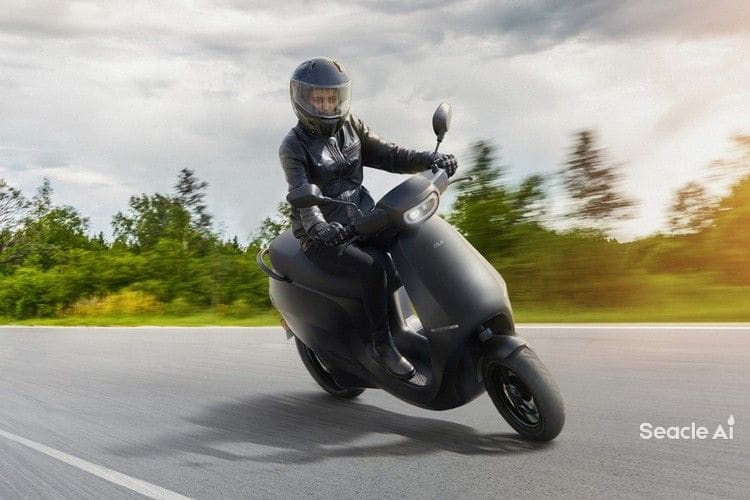
Observation: aggressive throttle in stop-start city traffic produces noticeable range loss — around a 20–35% drop versus steady-speed runs. This matters because many owners expect the full claimed range in mixed commuting.
Charging time and battery, and minimum height to ride Ola S1 Pro
Battery size varies by variant; main large-battery S1 Pro models use roughly a 3.9–4.0 kWh pack. Charging times depend on charger type:
- Fast charger (public DC): 0–80% in under an hour as per some public charging reports (availability varies by city).
- Home AC charging (standard Ola charger): 0–80% typically in 3–6 hours depending on onboard charger and battery health.
Minimum recommended rider height: around 155 cm (about 5’1″). The seat height and long footboard make shorter riders sit flat-footed at stops only if they are comfortable reaching; shorter riders usually notice this first on uneven surfaces or when balancing at traffic lights.
Safety, comfort and technology features
- Brakes & ABS: Disc brakes front and rear; some variants include a single-channel ABS system. Brake feel is firm but initial bite can be abrupt—expect a learning curve when braking from higher speeds.
- Suspension: Telescopic front fork and mono-shock rear tuned for urban roads; comfortable over potholes at city pace but gets busy on broken tarmac at higher speeds.
- Connectivity: Large touchscreen with navigation, OTA updates and ride modes—useful for route planning but can be distracting if used while riding.
- Security: Keyless start, basic immobiliser and app-based locking features; these add convenience but still rely on cellular service for some functions.
Comfort note: the seat cushioning is plush initially, but for riders doing two-back-to-back commutes (2+ hours) you feel more pressure on the sit bones — a common observation among daily users.
Real riding experience and practical observations
In town the scooter’s quick throttle and high torque make lane changes and short overtakes easy; that’s useful in Indian cities where rapid speed changes are common. However, the punchy acceleration also translates to increased tyre and brake wear if you’re frequently using top performance.
Second observation: heat and heavy accessory load (phone charging, lights) reduce range notably in summer. Short runs with repeated stopping cause the battery management to operate less efficiently, visible after 10–15 high-acceleration bursts.
If you want to check current pricing or availability in your city, compare options and dealers or check price at local showrooms.
Ola S1 Pro vs Ather 450X comparison
Below is a focused comparison across the main buyer concerns. Ather 450X numbers are based on manufacturer claims and independent test reports up to 2025.
| Category | Ola S1 Pro | Ather 450X |
|---|---|---|
| Engine / Motor | Hub motor, peak ~8.5 kW (claimed) | Hub motor, peak ~6 kW (claimed) |
| Torque | ~58 Nm (claimed) | ~26 Nm (claimed) |
| Top speed | Claimed 115 km/h; real-world safe cruising 80–100 km/h | ~80–90 km/h top; comfortable city pace up to 70–80 km/h |
| Range per charge | Claimed 150–180 km (large battery); real-world 80–110 km | ARAI ~85 km; real-world 60–80 km depending on riding |
| Battery / Tank capacity | Battery ~3.9–4.0 kWh (no fuel tank) | Battery ~2.9 kWh (no fuel tank) |
| Price range (approx.) | INR 1.10–1.65 lakh ex-showroom (varies by variant & state) — as of 2025/26 | INR 1.30–1.55 lakh ex-showroom (model-dependent) |
| Braking & safety | Disc front/rear, single-channel ABS on some variants | Disc front/rear, better-integrated ABS & regenerative tuning |
Nuanced note: the S1 Pro clearly out-muscles the 450X in straight-line acceleration and claimed range, but the 450X often feels sharper in handling and has more conservative range figures that align closer with real-world outcomes. If you prioritize outright range and top-end speed, the S1 Pro is compelling; if you prefer nimble handling and consistent real-world numbers, the 450X is a safer bet.

Pros & cons and who should avoid it
Pros
- Strong acceleration and high claimed top speed — good for quick overtakes.
- Large battery options offer long claimed range for one-charge commutes.
- Feature-rich connected experience and large touchscreen.
Cons / Limitations
- Not ideal for long sustained highway touring — batteries and motor heat management drop efficiency at constant high speed.
- Real-world mileage often significantly lower than claimed figures in city traffic.
- Heavier than some rivals, which affects low-speed maneuverability and parking in tight spaces.
Who should avoid it: riders looking for a lightweight, simple city runabout or those planning frequent highway trips with heavy pillion loads. This scooter is oriented toward riders who want performance and tech, not minimalism.
Alternatives and buying guidance
If you value sharper handling and predictable real-world range, consider options like the Ather 450X or similar mid-capacity scooters. If budget and simplicity matter more than feature set, lower-capacity electric scooters will save money on maintenance and tyres.
Check local incentives, charging infrastructure near your commute, and dealer support — these variables change ownership economics much more than headline specs.
FAQs
What is the expected range per charge for the Ola S1 Pro in city riding?
City range per charge usually sits between 80–110 km on a single charge in mixed traffic when you ride moderately; aggressive throttle or high-speed stretches cut that number significantly.
How long does charging time take for the Ola S1 Pro?
Using a standard home AC charger expect 3–6 hours to reach around 80% depending on battery health and onboard charger. Fast public DC chargers (where available) can bring it to 80% in under an hour for certain variants.
Which scooter is better for performance-focused riders: Ola S1 Pro or Ather 450X comparison?
If you want raw acceleration and higher top speed, S1 Pro tends to lead. For predictable handling, conservative real-world range and sorting city agility, Ather 450X is often preferable.
What is the minimum height to ride Ola S1 Pro safely?
A recommended minimum is about 155 cm (5’1″). Shorter riders should try the seat and footboard in person because balance at stops and foot placement matters more than the spec number.
Are there significant maintenance or long-term costs to consider?
Expect tyre and brake wear to be higher if you use aggressive acceleration regularly. Battery degradation over several years will reduce claimed range; factor in potential battery replacement costs down the line, and check warranty coverage.
Conclusion
The Ola S1 Pro is a feature-heavy, performance-leaning electric scooter that makes sense for commuters who want brisk acceleration, a high top speed for inner-city bursts, and long claimed range variants for one-charge commutes. It is not ideal for frequent highway touring, heavy pillion loads, or riders prioritizing ultra-lightweight maneuverability. Real-world range and maintenance realities should guide purchase decisions more than marketing claims.
If your daily use is within urban and suburban limits, and you value tech and sprint performance, the S1 Pro is worth considering. If you need consistent real-world range, lighter handling, or frequent long-distance runs, look elsewhere or test ride both the S1 Pro and Ather 450X before deciding.
Want to compare local prices and book a test ride? Check price at nearby dealerships or view product listings to compare variants.