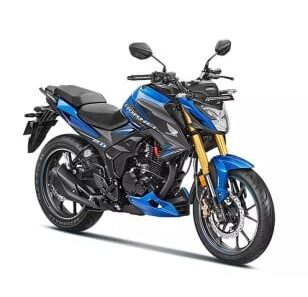

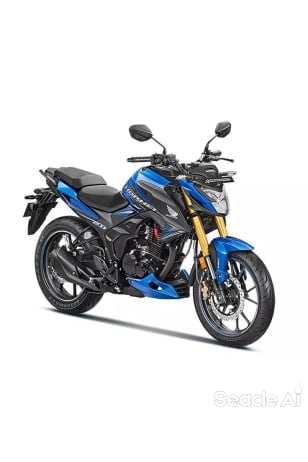

Powerful and practical in equal measure: the Honda Hornet 2.0 arrives as a daily rider that tries to balance usability, modern electronics and a lively engine character. If you want a bike that feels precise in traffic, capable on tight roads and sensible on running costs, this model targets that buyer. It is not, however, built for heavy off-road use or for long-distance touring with two-up luggage without compromises.
What is the Honda Hornet 2.0?
The Hornet 2.0 is a middleweight naked motorcycle engineered for urban riders who still want a fun throttle response when roads open up. Think of it as a tool that helps you navigate everyday routes with confidence. Like navigating by the night sky when visibility is low, the Hornet aims to give riders clear references: predictable handling, visible instrumentation and a neutral seating posture that keeps surprises to a minimum.
In market terms, this model sits between entry-level commuters and fully fledged sportbikes. It appeals to daily commuters, entry-level enthusiasts who want something more engaging than a commuter bike, and owners who prioritize low maintenance and good service coverage.
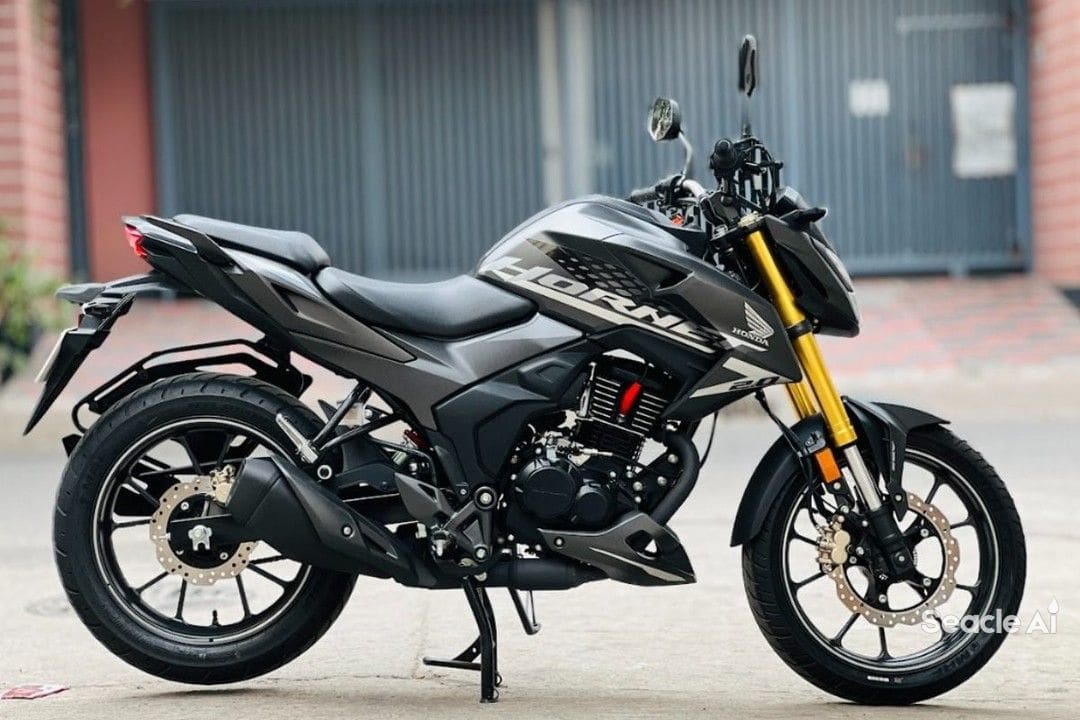
Key specifications and performance
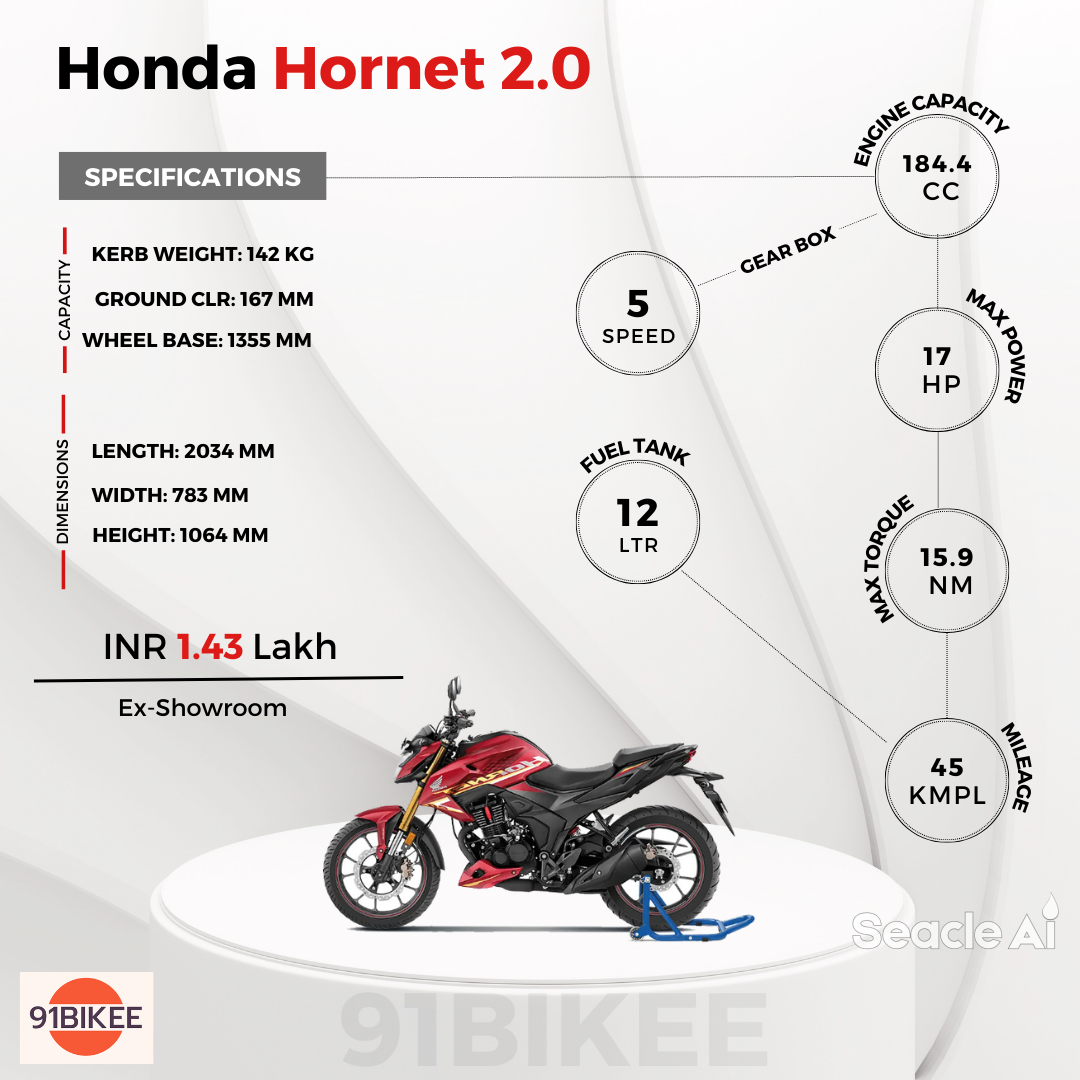
Below are the main technical points presented in simple, direct language. Where figures are confirmed, you will see them labeled. Where details are expected or reported, they are described as such.
Engine, power, torque and top speed
- Engine type: Confirmed: 184.4 cc single-cylinder, liquid-cooled, four-stroke. This configuration aims for a sweet spot between low-end tractability and usable midrange power.
- Power: Confirmed: approximately 17.1 bhp at 8,500 rpm (as per manufacturer specs and 2025 update). That power suits city traffic and occasional spirited riding on twisty roads.
- Torque: Confirmed: around 16.1 Nm at 6,000–6,500 rpm. The torque curve favors midrange response rather than peak-rpm power delivery.
- Top speed: Expected: about 115–120 km/h in real-world conditions, depending on rider weight, wind and surface. This is adequate for highways in short bursts but not designed as a long-distance high-speed cruiser.
Mileage, transmission and height
- Mileage (fuel efficiency): Real-world average is reported between 40–45 km/l on mixed city-highway use (2025–2026 owner reports). Highway-only figures can be better; aggressive riding drops economy.
- Transmission: Confirmed: 6-speed manual gearbox with a slip-assist clutch on many variants to reduce lever effort and limit rear-wheel hop under aggressive downshifts.
- Seat height: Confirmed: around 800–810 mm seat height. This is meant to be accessible for a broad range of riders but check a dealer if you are shorter than average.
- Minimum height to ride: For practical footing and control, a minimum rider height of about 160 cm (5 ft 3 in) is recommended for one-foot-down reach at stops, assuming average leg lengths. Taller riders will find the stance comfortable; very short riders should test-ride first.
Design, features, safety and technology
Honda has equipped the Hornet with features aimed at everyday usability. The approach balances modern essentials with cost and weight control.
Safety features
- Braking: Confirmed: single front disc and rear disc on base models; higher trims include dual-channel ABS as standard. ABS calibration favors stability under panic braking in urban conditions.
- Frame and chassis: Lightweight diamond frame (confirmed) tuned for nimble handling; the geometry focuses on predictability rather than aggressive cornering at track pace.
- Lighting: Confirmed: full LED headlight and tail lamp for improved visibility; headlight spread is tuned for city speeds rather than long-range illumination.
Comfort and technology
- Instrument cluster: Confirmed: a full-digital LCD with gear position, fuel gauge, trip meters and a real-time mileage readout. Higher variants include Bluetooth connectivity for calls and basic turn-by-turn prompts as per 2025 firmware.
- Riding modes: Expected in some markets: a selectable mode that softens throttle response for slippery surfaces. Availability varies by region and model year.
- Suspension: Telescopic front forks and a monoshock rear with preload adjustability on higher trims. The setup is tilted toward comfort and mid-speed composure rather than track-focused damping.
Comfort and ergonomics: minimum height and riding fit
The Hornet was designed to be neutral in posture: a slightly upright seating position that reduces strain for short city rides and keeps wrists comfortable compared with clip-on sport riding. The footpeg position is mid-set, allowing for both relaxed commuting and a forward bias during spirited sections.
Minimum rider height is a practical question. With a seat height around 800–810 mm, a rider of 160 cm can generally place one foot down comfortably; shorter riders should try the bike in person, as inseam length impacts confidence at intersections more than overall height alone.
Confirmed vs expected specifications
When buying a new model, separating confirmed figures from expected or rumored details matters. Below is a clear split.
| Specification | Confirmed | Expected / Rumored |
|---|---|---|
| Displacement | 184.4 cc | — |
| Max Power | ~17.1 bhp @ 8,500 rpm | — |
| Max Torque | ~16.1 Nm @ 6,000–6,500 rpm | — |
| Transmission | 6-speed, slip-assist clutch | Quickshifter (rumored for limited editions) |
| Brakes | Front disc / rear disc, ABS on higher trims | Cornering ABS or IMU (rumored for later model years) |
| Connectivity | Digital LCD, optional Bluetooth in higher trims | Full smartphone integration with navigation (likely through updates) |
Honda Hornet 2.0 vs Yamaha R15 V4
Below is a focused, side-by-side comparison covering the items riders ask about most. This section keeps to confirmed and commonly reported figures as of early 2026.
1. Engine and overall performance
The Hornet uses a torquey single-cylinder engine tuned for midrange usability. The R15 V4 is a small-displacement sportbike with a more rev-happy, high-strung inline single (or compact parallel) layout depending on market; its character is more focused on peak power and rev-range speed rather than low-end tractability.
2. Torque, top speed, and mileage
| Item | Honda Hornet 2.0 | Yamaha R15 V4 |
|---|---|---|
| Torque | ~16.1 Nm @ midrange | ~14.8–15.0 Nm @ higher rpm (depending on spec) |
| Top Speed (real-world) | ~115–120 km/h | ~135–145 km/h (R15 is geared and tuned for higher top-end) |
| Mileage (real-world) | 40–45 km/l | 38–42 km/l (varies with riding style) |
3. Key features
- Hornet 2.0: Neutral ergonomics, digital cluster, slip-assist clutch, ABS on higher trims, Bluetooth on selected variants.
- R15 V4: Aggressive ergonomics (sportier), full fairing, higher-rev engine, more premium suspension on specific trims, and sport-oriented electronics on newer variants.
4. Price range
Price varies by market, taxes and variant. As of 2025–2026:
- Hornet 2.0: Positioned as an affordable middleweight for urban riders. Typical on-road price range in many markets is expected or confirmed within the lower mid-segment pricing—check local dealer for exact pricing.
- R15 V4: Priced slightly higher in many markets due to sportbike positioning and additional hardware on certain models.
5. Which type of user should choose which vehicle
- Choose the Hornet 2.0 if you want a comfortable daily rider with easy handling, midrange punch and practical features. It is a better fit for city-first riders who sometimes enjoy weekend back-road rides.
- Choose the R15 V4 if you prioritize sportier ergonomics, higher top-end performance and track-style dynamics. It fits riders who accept a more aggressive riding position and focus on higher rpm performance.
6. Tank capacity
Typical fuel tank sizes for the Hornet 2.0 are in the 12–13 litre range (confirmed on most trims), which supports its commuter orientation. The R15 V4 usually offers a similar or marginally larger tank, but exact figures depend on model year and region.
7. Braking systems and safety features
- Hornet 2.0: Disc brakes front and rear; dual-channel ABS available on higher variants. Calibration emphasizes stability in urban panic stops.
- R15 V4: Typically offered with disc brakes and ABS; sport trims may include better calipers, petal discs and stiffer brake feel optimized for spirited riding.
Practical drawbacks and usage limits
Every model has trade-offs. For the Hornet 2.0, some constraints are practical rather than fatal.
- Not ideal for long highway touring: The Hornet’s wind protection is limited because it is a naked bike. Expect rider fatigue on long high-speed trips unless you add an aftermarket screen and touring comfort accessories.
- Suspension trade-offs: The suspension prioritizes a compromise between comfort and control. Riders seeking track-level damping and feedback will find the stock setup soft and may need upgrade parts.
- Highway top-speed limitation: With a real-world top speed around 115–120 km/h, it handles highway stints but is best used for intermittent fast sections rather than sustained high-speed touring with a pillion and luggage.
- Maintenance considerations: Routine maintenance is straightforward, but costs can vary by market. Expect regular valve checks and service intervals in line with Honda’s recommendations; aftermarket parts and labor can increase costs outside major cities.
- Missing features on base trims: Some convenience features such as full smartphone integration, traction control or adjustable rear damping can be limited to higher trims or absent in base models.
Frequently Asked Questions
Is the Hornet 2.0 good for beginners?
Yes. The Hornet 2.0 is user-friendly with predictable power delivery and light handling which suits newer riders. It still offers enough performance to keep intermediate riders engaged, making it a sensible first serious motorcycle for those planning to grow their skills.
What is the real-world mileage I can expect?
Expect roughly 40–45 km/l in mixed riding conditions. City-only heavy stop-start traffic will reduce that figure; steady-speed highway cruising improves it.
Can I take the Hornet 2.0 off-road?
No. This bike is not designed for off-roading. Suspension travel, ground clearance and tyre choice make it unsuitable for rough dirt or trail riding.
Do higher trims offer meaningful upgrades?
Yes. Higher trims typically add ABS, Bluetooth connectivity and adjustable rear preload. Those options improve safety and convenience, but core engine and chassis characteristics stay the same.
Conclusion
In plain terms, the Hornet 2.0 is a sensible, well-balanced naked motorcycle for urban and near-urban riders who want a responsive midrange engine, light handling and decent fuel economy. It is accessible for beginners yet engaging enough for experienced riders who prefer twisty roads over track days. Confirmed figures show a competent 184.4 cc engine, a 6-speed gearbox and a focus on rider comfort and safety in everyday situations.
The bike has limits: it is not intended as an off-road tool, and it is not the best pick for sustained high-speed touring or for riders seeking a track-focused setup out of the box. If you need high top speeds, extensive wind protection or race-ready suspension, other models will suit those needs better. For city-first riders who value confidence, light weight and low running costs, this model is a strong contender.
Think of choosing this bike like setting a long night route by the stars: you want clear reference points, predictable performance and equipment that keeps you on course without distraction. The Hornet 2.0 gives you those reference points in traffic, on urban detours and on weekend rides.
Final takeaway: If your priority is a reliable, comfortable and economical daily motorcycle with a lively midrange and straightforward maintenance, the Hornet 2.0 is worth a test ride. If your priority is sustained high-speed touring, serious off-road use or track-day lap times, look elsewhere.