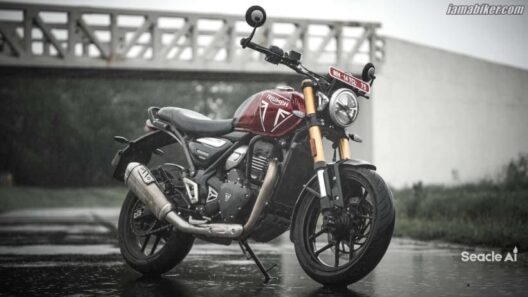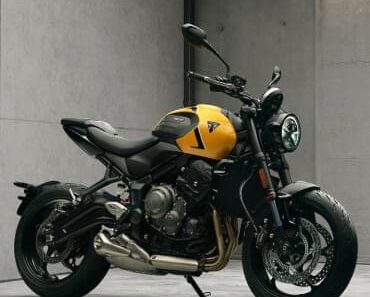

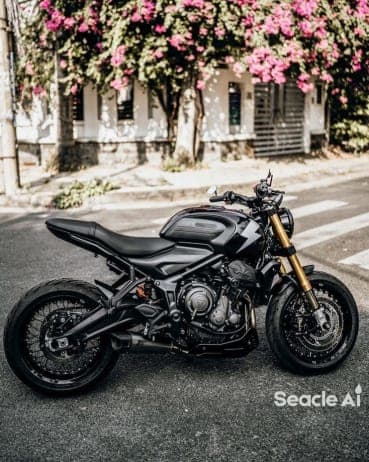

The Triumph Trident 660 is a middleweight roadster aimed at riders who want a simple, punchy three-cylinder experience without the fuss of a full superbike. In practical terms: it’s a nimble urban commuter that can handle weekend canyon runs, but it isn’t designed for heavy luggage, extended high-speed touring, or off-road work. The typical minimum height to ride the Trident 660 comfortably is about 165 cm (5’5″), because the 805 mm seat height and the bike’s reach favor riders of average height or taller.

Table of Contents
- Key specifications and what they mean (Triumph Trident specs)
- Safety, comfort and technology highlights
- Real-world riding impressions and limitations
- Price, ownership costs and Triumph Trident 660 price
- Comparison — Z650 vs Trident
- Who should buy it and who should avoid it
- FAQ
- Conclusion
Key specifications and what they mean (Triumph Trident specs)
The Trident 660 is powered by a 660 cc inline-three engine tuned for usable midrange rather than peak horsepower. Below are the core numbers you’ll actually feel on the road:
- Engine: 660 cc inline-three, liquid-cooled, DOHC — designed for smooth torque delivery rather than extreme top-end rush.
- Power: ~80 bhp at ~10,250 rpm (manufacturer-claimed). That translates to brisk city acceleration and comfortable twin-lane overtakes, but not superbike pace on the autobahn.
- Torque: ~64 Nm at ~6,250 rpm — the midrange shove is useful in everyday traffic; you don’t have to wring the engine to move quickly.
- Top speed: Around 200 km/h in ideal conditions — theoretical more than practical for regular use, especially on Indian highways.
- Transmission: 6-speed gearbox with a light clutch; gear ratios favor smooth pulls in city and open road.
- Seat height: 805 mm — taller riders feel more natural; shorter riders may need to be mindful of footing at stops.
- Kerb weight: About 189–193 kg depending on market specification — manageable for most riders but noticeable during low-speed maneuvers.
- Confirmed vs Rumored: The numbers above reflect confirmed factory specs available in 2025/2026 markets. Any minor power/torque revisions for local variants would be announced by the dealer networks.
Observation: the engine’s linear torque makes commuting less tiring because you’re not constantly slipping the clutch to get moving — this becomes noticeable during daily traffic in city centers.
Safety, comfort and technology highlights
- Brakes: Twin front discs with ABS and a single rear disc; switchable traction control is standard in most markets.
- Chassis and suspension: Steel tubular frame, non-adjustable entry-level forks in some trims, adjustable rear preload on select markets.
- Electronics: Basic rider modes, traction control, and ride-by-wire throttle. No semi-active suspension or cornering ABS on standard models.
- Comfort: Narrow seat profile helps shorter riders touch down, but long rides reveal limited cushioning after 2–3 hours — lumbar fatigue shows up for taller riders.
Real consequence: the absence of advanced electronic suspension keeps maintenance simpler and cost lower, but you miss the adaptive damping benefits on long, mixed-road tours.
Real-world riding impressions and limitations
On urban runs the bike feels light and responsive. Throttle response is tidy at low revs; the triple’s character lends a pleasant exhaust note without overwhelming heat transfer to the rider — however, in stop-and-go traffic the engine temperature is more noticeable than on smaller twins.
Two experience-derived observations:
- Rider fatigue builds after 2–3 hours because the seat padding and upright posture expose your lower back — not a touring machine.
- When filtering at low speeds the bike’s 190 kg-ish weight and narrow bars make it easy to maneuver, but managing the weight on an incline requires careful clutch work.
Limitation called out plainly: it is not ideal for heavy luggage or extended high-speed touring. If you plan to carry pillion and luggage across long distances frequently, consider a more touring-focused chassis and suspension.
Price and running costs (Triumph Trident 660 price)
In 2025–26 the Trident 660 sits in the premium-middleweight bracket. Approximate price ranges (market-dependent):
- UK/EU: £7,500–£8,500 (ex-showroom in 2025)
- India (CBU/CKD-dependent): ₹6.5–9.5 lakh on-road (varies heavily with duties and trim)
- USA: Limited official availability; imports/grey-market prices vary.
Running costs: service intervals typically 10,000–12,000 km. Parts and labour are pricier than Japanese twins — expect higher annual service bills compared to a Z650. This matters when ownership stretches beyond three years.
Check Price with local dealers for exact, current offers.
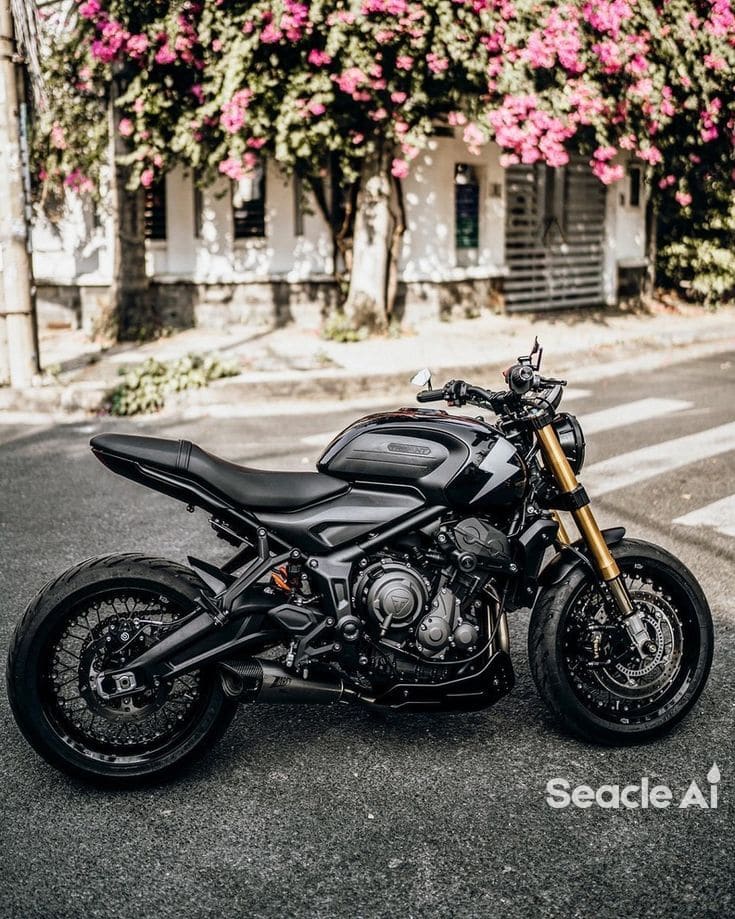
Comparison — Z650 vs Trident (Z650 vs Trident)
Below is a clear comparison across practical categories. Numbers are approximate and reflect commonly available 2025/2026 specs.
| Aspect | Trident 660 | Kawasaki Z650 |
|---|---|---|
| Engine & performance | 660 cc inline-three; smoother midrange, ~80 bhp | 649 cc parallel-twin; peppy mid-range, ~67–68 bhp |
| Torque / Top speed / Mileage | ~64 Nm / ~200 km/h / ~18–22 kmpl (real-world varies) | ~64 Nm / ~185–190 km/h / ~20–24 kmpl (often slightly more frugal) |
| Key features | Three-cylinder character, basic rider modes, lightweight chassis | Simpler engine layout, lower servicing costs, slightly lighter kerb weight |
| Price range | Higher in some markets due to import duties | Generally slightly cheaper and easier to source parts |
| Tank capacity | ~14–15 L | ~15 L |
| Brakes & safety | ABS, traction control; strong twin discs | ABS standard; comparable braking hardware |
Nuanced take: the Trident wins on character and smoother power delivery; the Z650 wins on simplicity, likely lower ownership cost, and slightly better claimed economy. If you crave that triple-note and sharper midrange, the Trident makes more sense.
Who this suits best — and who should avoid it
- Buy if: you want a fun, usable middleweight for city and weekend rides, value engine character over outright economy, and accept slightly higher running costs.
- Avoid if: you need a dedicated tourer, plan heavy luggage or pillion miles often, require off-road capability, or prioritize the lowest service costs.
FAQ
What is the Triumph Trident 660 mileage in city and highway use?
Real-world averages range from 18–22 kmpl depending on traffic, riding style and fuel quality. Highway cruising at steady speeds (90–110 km/h) typically yields the upper end of that range.
What is the minimum height to ride the Trident 660?
The practical minimum rider height is around 165 cm (5’5″). Shorter riders can manage with good technique but may feel less confident at junctions due to the 805 mm seat.
How does maintenance cost compare to the Kawasaki Z650?
Expect higher parts and labour costs for the Trident over the Z650 in many markets, especially where Triumph parts are imported. Service intervals are similar, but dealer hourly rates and part prices tilt ownership costs upward.
Is the Trident 660 suitable for long-distance touring?
It is usable for occasional tours, but you’ll feel seat and suspension limitations after 2–3 hours of continuous riding. For frequent long-distance touring, look for a bike with a touring seat, taller windscreen, and more compliant suspension.
Conclusion
The Trident 660 is a focused middleweight: an engaging three-cylinder roadster that prioritises character and everyday usability. Its confirmed specs promise a lively, manageable ride in city and twisty roads, but the bike is not ideal for heavy touring, off-road use, or riders who demand the lowest long-term servicing costs. Shorter riders notice the seat height first; longer rides expose the seat padding limits. For most urban riders and weekend enthusiasts who value engine feel, it’s a smart pick. If you need frugal running costs and pure practicality, the Kawasaki Z650 or a dedicated tourer may be better choices.
Compare Options at local dealerships to test-ride and verify current pricing.