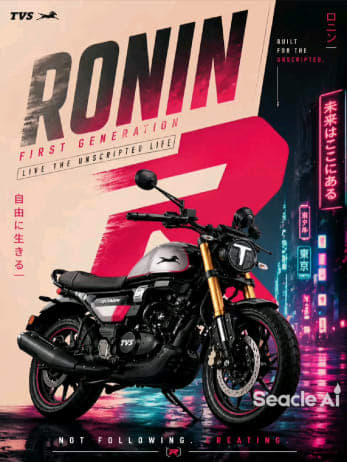

The TVS Ronin arrived as an attempt to blend everyday practicality with a slightly unruly roadster attitude; the result is a motorcycle that feels familiar in city traffic yet hints at weekend exploration. In the first few rides it’s easy to like the ergonomics and low-speed composure, but a few real-world caveats make all the difference when you plan multi-day trips or aggressive use.
Table of Contents
- First impression and who it’s for
- TVS Ronin specs & engine performance
- Safety, comfort and technology
- Drawbacks and when to avoid it
- TVS Ronin vs Yezdi Roadster — detailed comparison
- Use cases, alternatives and buyer advice
- FAQs
- Conclusion
First impression and who it’s for
The TVS Ronin arrives as a compact roadster aimed at riders who want a versatile daily commuter that can also handle short spirited rides. It’s not a heavy cruiser or a full touring machine — it’s closer to a do-it-all street bike with a touch of character.
Who it suits: urban riders who do 30–60 km daily, occasional weekend escapes on state highways, and those who value nimble handling over outright horsepower. Shorter riders will appreciate the moderate seat height; taller riders will like the upright posture. One practical observation: throttle response in traffic is forgiving but becomes peaky above 80 km/h, so long highway stints feel less relaxed than on larger-engined roadsters.
TVS Ronin specs & engine performance
Below are the key specs presented clearly. Confirmed items are those TVS lists in official brochures (as of 2025); ranges or real-world estimates are noted separately.
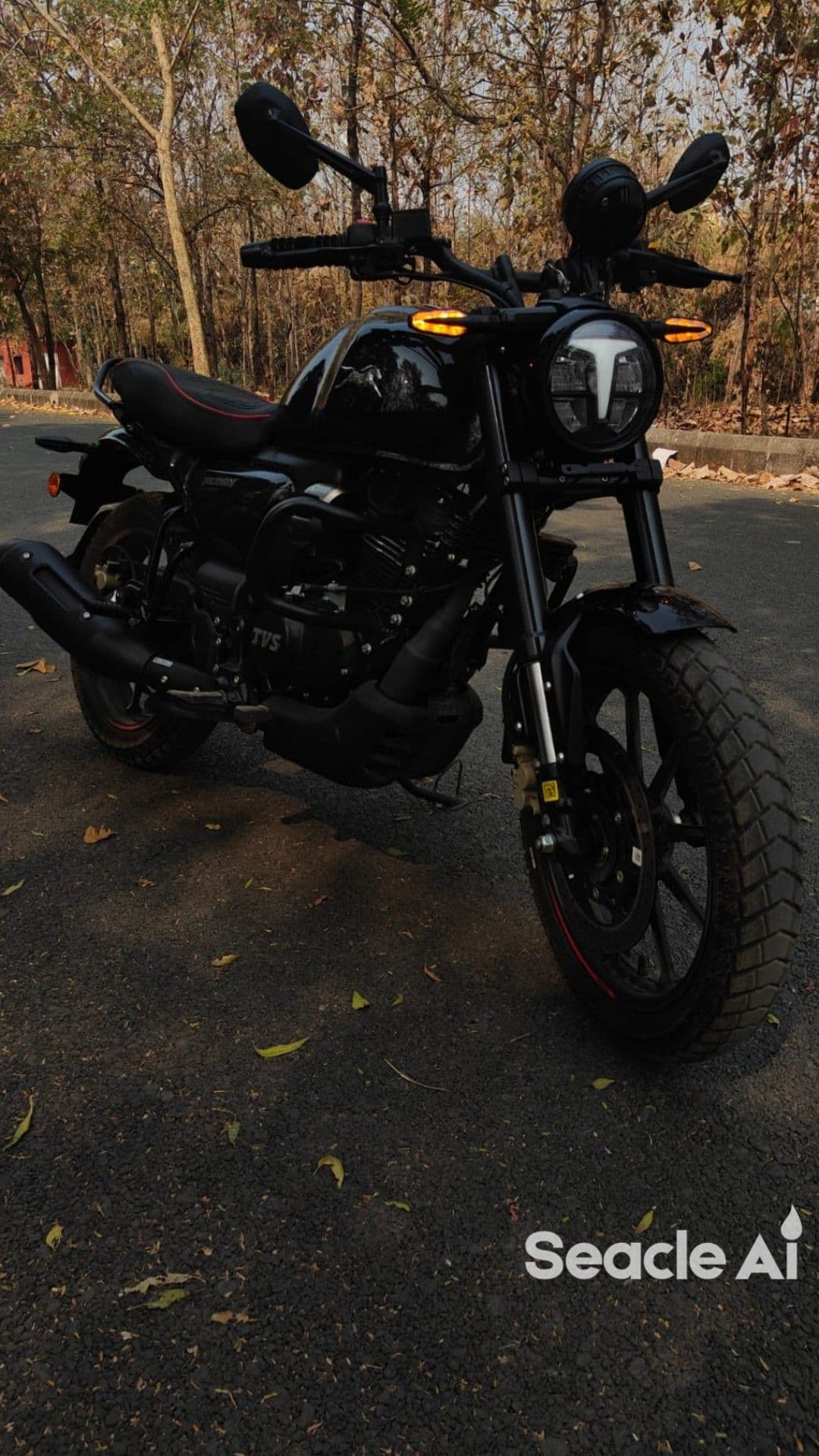
- Engine: Single-cylinder, ~225 cc (air-cooled/TC depending on variant).
- Power: Around 20 PS at mid-to-high revs (manufacturer figure in official spec sheet).
- Torque: Roughly 18–19 Nm at mid-range rpms (useful for city roll-on).
- Top speed: About 120–135 km/h in real-world conditions — enough for highways but not for sustained high-speed runs.
- Mileage: Manufacturer claims ~40 kmpl; expect 30–36 kmpl in mixed riding (city traffic drops it noticeably).
- Seat height / minimum rider height: Seat height is approximately 790–795 mm. Minimum recommended rider height: around 160 cm to flat-foot comfortably at stops.
- Transmission: 5-speed gearbox with a light clutch action suited for city riding.
- Fuel tank: About 12 litres (see comparison table below for exact numbers).
- Kerb weight: In the 155–165 kg range.
Real-world consequence: the relatively light weight and compact gearing make the bike feel punchy from traffic lights, but the engine can feel strained if you hang onto high rpm for long stretches — this becomes noticeable on sustained highway runs beyond 120 km/h.
Safety, comfort and technology
- Brakes: Front disc with ABS; rear disc depending on variant. Brake feel is progressive; not over-aggressive.
- Suspension: Telescopic front forks and a rear mono-shock tuned for urban comfort. It soaks potholes well at low speeds but can feel bouncy under heavy loads.
- Technology: Semi-digital instrument cluster with smartphone connectivity on higher trims, turn-by-turn navigation, and useful ride modes in some variants.
- Comfort: Upright ergonomics reduce wrist strain in city rides; however, the seat padding compresses after extended touring days—rider fatigue becomes noticeable after 3–4 hours in one stretch.
One subtle observation: the switchgear and mirrors are positioned in a way that windshield buffeting is minimized at moderate speeds, which helps on quick highway hops. This matters more than it seems when you do repeated weekend runs.
Drawbacks and when to avoid it
No bike is perfect. Below are real limitations and who should probably skip this model:
- Not ideal for heavy touring: Small tank and seat comfort mean multiple fuel stops and an aftermarket seat may be needed for long tours.
- Off-roading: The suspension travel and tyre profile are not made for trails—avoid rough gravel and rutted forest tracks.
- Performance-focused riding: Enthusiasts seeking high top speed or track performance will find the engine lacks the headroom and cooling robustness for sustained hard use.
- Maintenance: Occasional owners report slightly higher service frequency for clutch adjustments if used aggressively in stop-and-go city conditions.
Who should avoid it: riders planning multi-day highway camping trips, heavy pillion loads regularly, or frequent dirt-road riding. If you fall into those groups, a larger-displacement roadster or adventure bike is a better match.
TVS Ronin vs Yezdi Roadster — detailed comparison
| Spec / Feature | TVS Ronin | Yezdi Roadster |
|---|---|---|
| Engine & performance | ~225 cc single; ~20 PS; tuned for low-end usability and urban punch. | ~334 cc single; ~29–30 PS; stronger mid-range and higher top speed. |
| Torque, top speed, mileage | ~18–19 Nm; top speed ~125–135 km/h; real-world mileage 30–36 kmpl. | ~29–30 Nm; top speed ~140–150 km/h; real-world mileage ~28–32 kmpl. |
| Key features | Lightweight, nimble, smartphone connectivity on trims. | Heavier, torquier engine, classic roadster character, larger tank. |
| Price range (2025) | Expected retail roughly INR 1.40–1.60 lakh (ex-showroom) depending on variant. | Roadster ranges around INR 1.90–2.10 lakh (ex-showroom) for core trims. |
| Who should choose | Commuters and weekend city riders who want agility and lower running costs. | Riders wanting more torque, touring comfort, and classic character even at higher running cost. |
| Tank capacity | ~12 L | ~14 L |
| Braking & safety | Disc front + ABS; rear disc/ABS depending on variant; lighter braking feel. | Stronger braking hardware, dual-channel ABS standard on most trims. |
In short: the Ronin is lighter, cheaper to run, and easier in the city. The Roadster wins on torque, sustained cruising ability, and long-distance confidence. If you mostly commute and occasional short rides, choose the Ronin; for regular highway touring with a pillion, the Roadster makes more sense.
Use cases, alternatives and buyer advice
Best use cases for the TVS Ronin:
- Daily urban commuting with occasional weekend rides.
- Riders who prefer sharp low-speed handling and lower ownership costs.
Alternatives to consider if the Ronin misses your needs: mid-displacement cruisers for long-distance comfort, or adventure bikes for mixed-surface capability.
FAQs
- What is the TVS Ronin mileage in city and highway?
- Real-world figures vary: you can expect 28–36 kmpl in urban stop-and-go riding and closer to 35–40 kmpl on relaxed highway cruises. Rider style and traffic make the biggest difference.
- What is the minimum height to ride TVS Ronin?
- Seat height is roughly 790–795 mm; riders around 160 cm usually manage a comfortable foot placement, though those under 155 cm might find it a stretch.
- Is the TVS Ronin good for touring?
- Short tours are fine, but long multi-day highway touring exposes the small tank and seat comfort limits. If you tour often, consider a larger tank capacity and extra seat padding.
- How does TVS Ronin compare to Yezdi Roadster on maintenance?
- Ronin’s smaller engine and simpler setup generally mean lower fuel and service bills. The Roadster requires more fuel and can incur higher consumable costs but offers stronger touring capability.
Conclusion
The TVS Ronin is a practical, well-balanced street roadster for commuters who want a bit of character without high running costs. Its strengths are agility, decent city-friendly power delivery, and light weight. Limitations are clear: not a long-haul tourer, not built for off-road, and sustained high-speed riding reveals the engine’s limits. If you want nimble urban transport with occasional spirited rides, the Ronin is a sensible pick. If your priority is long highway days, heavy pillion use, or greater top-end performance, look at larger roadsters like the Yezdi Roadster.