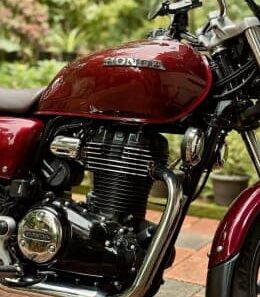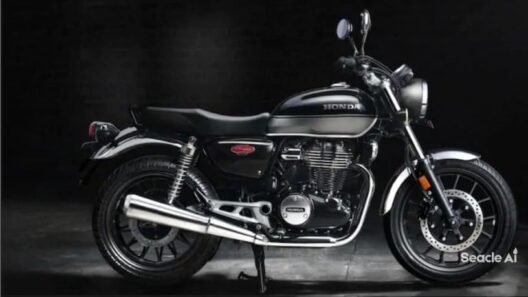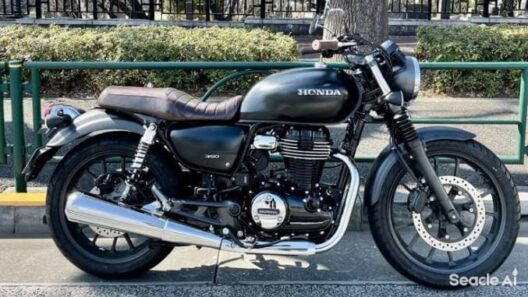


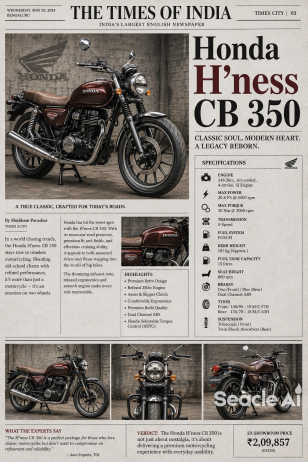

Honda H’ness CB350 arrives as a modern-retro roadster that aims to balance everyday usability with classic styling. In practical terms: it’s a mid‑weight commuter-cruiser with a relaxed riding posture, simple tech, and an engine tuned for low-end torque rather than outright speed. This opening snapshot matters because it sets realistic expectations for buyers who want style without sacrificing daily usability.
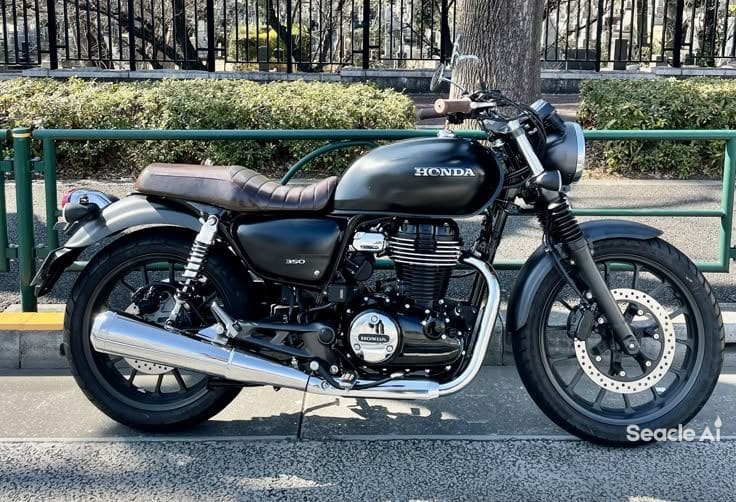
Table of Contents
- Summary
- CB350 features: engine, power and tech
- Honda CB350 mileage and range
- Who should buy Honda H’ness CB350
- Real-use notes and limitations
- Comparison H’ness CB350 vs Meteor 350
- Alternatives and final advice
- FAQs
Summary
The H’ness is best described as a comfortable city cruiser that doubles as an easy weekend machine. It leans into smooth low‑rpm pull and a relaxed ergonomics package rather than sporty handling or heavy load carrying. If you commute 20–60 km daily on mixed city roads and occasionally hit small highway runs, it fits well. Expect limitations on high-speed touring (sustained 120+ km/h endurance), spirited cornering compared with sportier bikes, and off-road attempts—it’s not built for them.
CB350 features: engine, power and tech
Engine & transmission: confirmed 348.36 cc single‑cylinder, air-cooled, overhead-cam engine with fuel injection and a 5‑speed gearbox. Peak power is around 20.8 PS at ~5,500 rpm and peak torque sits near 30 Nm at ~3,000 rpm. Those numbers make the bike feel strong from low revs—overtakes in traffic are relaxed rather than frantic.
- Top speed: around 120–125 km/h in real-world testing (weight, wind and rider position matter).
- Transmission: 5-speed, smooth shifts, a reasonably forgiving clutch for city stop‑start traffic.
- Seat height: about 800 mm, which affects who can flat‑foot the bike (see minimum height below).
Confirmed hardware includes telescopic front forks and twin rear shocks, a 310 mm front disc and a 240 mm rear disc with dual-channel ABS. Higher trims have Bluetooth connectivity and a simple digital tripmeter; the layout is intentionally uncluttered—like a quiet archive where every control is where you expect it.
Honda CB350 mileage and range
Claimed efficiency is manufacturer-quoted in the low 40s kmpl under ideal test cycles; real-world commuting figures typically land between 32–38 kmpl depending on traffic, rider weight and city vs highway mix. With a 15-litre tank, practical range is around 420–550 km between fills if you manage speeds and keep it below prolonged high-rpm use.
Observation: on stop‑start urban routes the bike’s low-end torque reduces the need to downshift frequently, which slightly improves fuel economy compared with a smaller‑torque engine. This becomes noticeable during long commutes of 45+ minutes.
Who should buy Honda H’ness CB350
This bike suits riders who value refinement and everyday civility over outright character or raw power. Pick it if you:
- Are 165 cm or taller and prefer a relaxed upright posture
- Ride mostly in cities and occasional highways (short touring)
- Want low maintenance intervals and a Honda service network
- Care about classic styling without extreme vintage fiddliness
Minimum height to ride Honda H’ness CB350: roughly 165 cm (about 5’5″) for a confident one-foot-flat stance. Shorter riders usually notice this first when stopping on inclines or uneven kerbs.
Check Price — view dealer listings for current offers and colour availability.
Real-use notes and limitations
Comfort is very good for city and relaxed two-up trips, but the seat starts to show fatigue after 3–4 hours; riders report more pressure in the lower back on full-day rides versus dedicated tourers. The twin-shock setup is tuned for a compliant ride; however, it trades off sharper mid-corner feedback. This is where things get tricky: at higher lean angles you’ll feel the heavy 181–185 kg kerb weight more than on lighter bikes, which dampens enthusiasm for fast twisty roads.
Maintenance and running costs are reasonable, but periodic valve checks and air-filter changes are essential if you ride dusty Indian roads—neglect raises long-term service bills. One realistic drawback: weak wind protection means highway fatigue increases above 100 km/h, making long high-speed tours less comfortable.

Comparison H’ness CB350 vs Meteor 350
| Item | Honda H’ness CB350 | Royal Enfield Meteor 350 |
|---|---|---|
| Engine & performance | 348 cc single, ~20.8 PS; tuned for low‑end torque and smooth pulls | 349 cc single, ~20.2 PS; relaxed torque curve, slightly softer top‑end |
| Torque, top speed, mileage | ~30 Nm; top speed ~120–125 km/h; real-world 32–38 kmpl | ~27 Nm; top speed ~110–120 km/h; real-world 30–36 kmpl |
| Key features | Dual‑channel ABS, simple Bluetooth in higher trims, analogue-digital dial | Tripper navigation, dual-channel ABS, minimal digital aids |
| Price range (India, ex-showroom, 2025) | Approx INR 1.95–2.25 lakh | Approx INR 1.70–2.05 lakh |
| Who should choose which | Buy if you prefer lighter controls, snappier low-end response and lower perceived vibration | Choose Meteor for a relaxed cruiser feel, simpler tech, and slightly lower price |
| Tank capacity | 15 litres | 15 litres |
| Braking & safety | 310 mm front disc, 240 mm rear, dual-channel ABS | 300 mm front disc, 270 mm rear, dual-channel ABS |
Nuance: the H’ness feels sharper from low rpm and generally revs less at city speeds; Meteor compensates with a more laid-back exhaust note and a slightly broader saddle for taller pillion comfort.
Alternatives and final advice
Alternatives in the same space include the Kawasaki W175 and Jawa 42 (where available), but those trade more modern reliability for less torque or older tech. If you plan long high-speed touring, a proper touring platform with wind protection and larger fuel tank is a better fit than the CB350.
Final practical summary: the H’ness CB350 is a sensible daily cruiser with a characterful engine and classic looks. Strengths are low‑rpm torque, comfortable ergonomics for shorter trips, and manageable running costs. Drawbacks include limited wind protection, suspension that leans toward comfort rather than sport, and seat fatigue on long rides. If you regularly do 300+ km highway days or need off-road capability, this bike is not ideal.
Compare Options — check dealer finance and service packages to see total ownership cost before deciding.
FAQs
What is the minimum height to ride Honda H’ness CB350?
Minimum comfortable height is about 165 cm (5’5″). Shorter riders can manage with tips but may struggle on steep uphill stops or uneven surfaces.
What mileage can I realistically expect from the Honda CB350?
Real-world urban to mixed use typically returns 32–38 kmpl. If you mostly cruise on highways at 90–100 km/h you can push the number higher; heavy two-up riding or high-rpm runs drop it into the high 20s.
Is the Honda H’ness CB350 good for long tours?
It handles occasional weekend trips well, but for sustained high-speed touring you’ll notice wind fatigue and seat soreness after 3–4 hours. Riders seeking long multi-day highway rides should consider bikes with better wind protection and larger tanks.
How does maintenance compare versus the Meteor 350?
Both have simple air-cooled engines; Honda’s service network and parts availability are broad, which usually keeps scheduled maintenance predictable. Meteor owners sometimes report lower initial prices for parts, but long-term reliability and dealer support vary regionally.
Are there any updates expected for the H’ness in 2026?
As of 2025–2026 there are occasional reports of minor cosmetic and tech updates (colour options, slight instrument tweaks). If Honda announces new variants, expect modest electronic additions rather than fundamental mechanical changes—specs may change if Honda releases a refreshed model.