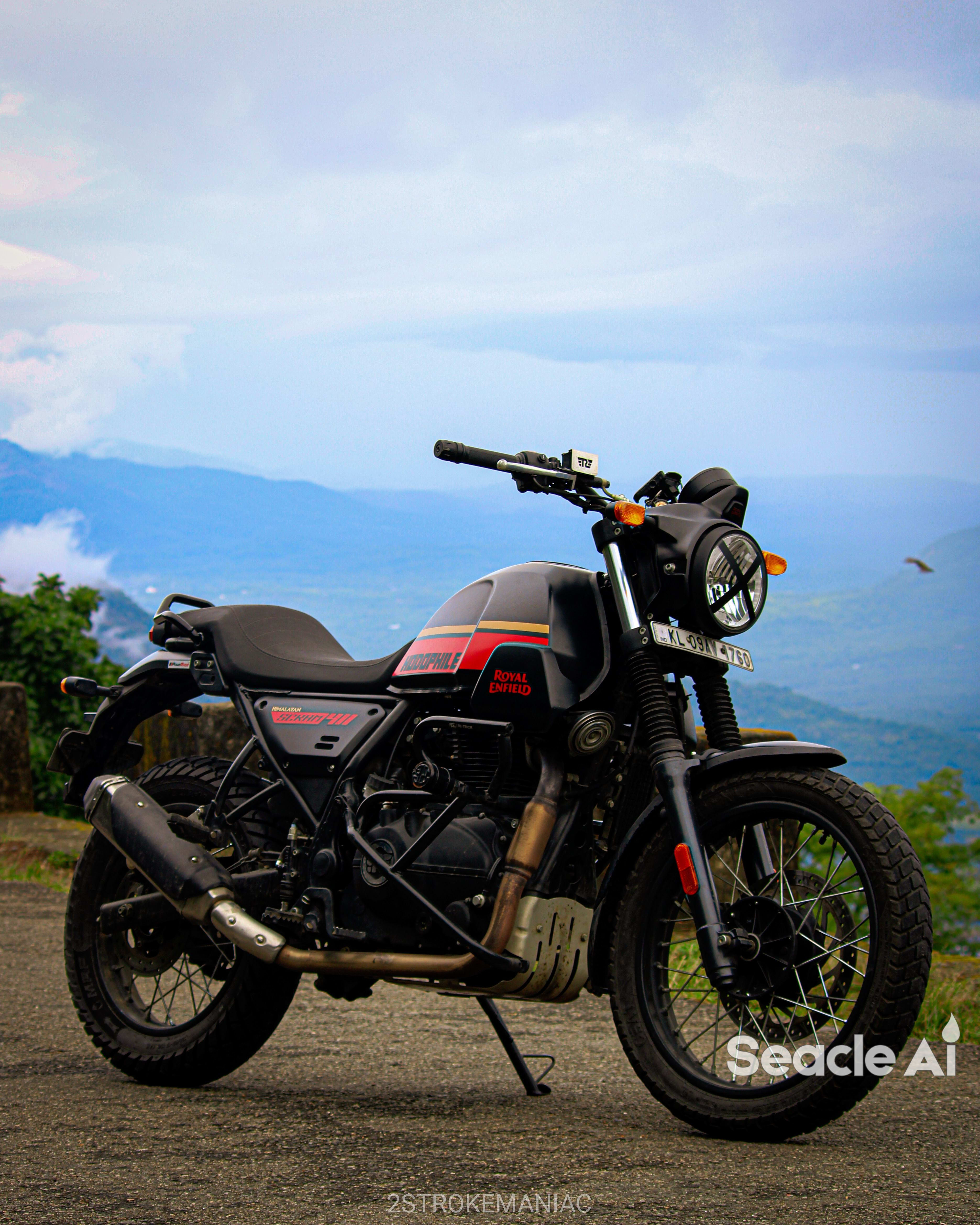



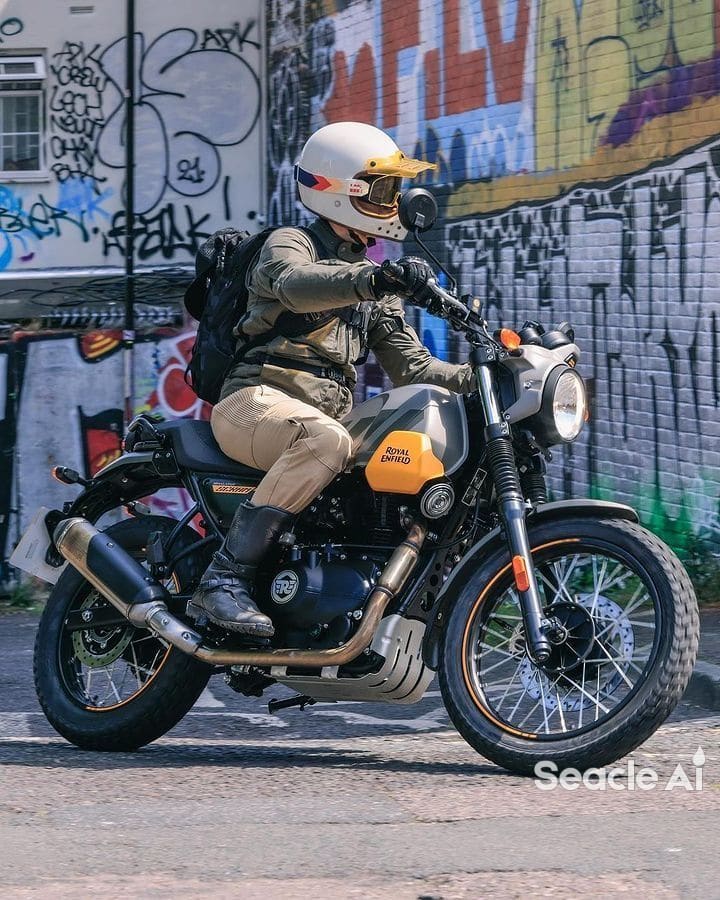
The Royal Enfield Scram 411 is a middleweight, road-biased scrambler built from the 411cc single-cylinder platform you’ve seen in other Royal Enfield models. It’s pitched at riders who want a comfortable, upright, light-adventure style motorcycle for mixed urban and light-gravel use rather than full-on adventure or serious off-road. Within the first 100 km it’s obvious: the ergonomics and simple power delivery work well in traffic, but the bike’s mass and suspension limits become clear on faster highways or rough trails.
Table of Contents
- What kind of bike and who is it for
- Scram 411 features — Safety, comfort, and tech
- Scram 411 mileage and performance
- Minimum height to ride Scram 411
- Where it falls short and limitations
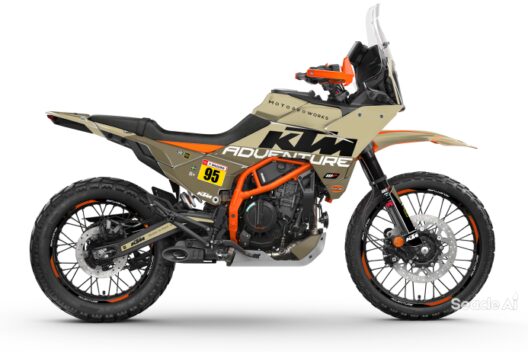
- Scram vs 390 Adventure: comparison
- Real usage notes and rider observations
- Alternatives and who should buy which
- FAQs
- Conclusion and buying advice
What kind of bike and who is it for
The Scram 411 is a street-focused scrambler built on the 411cc single-cylinder engine. It’s for riders who prioritise a relaxed upright riding position, predictable torque at city speeds, and an identity that’s usable for weekend runs on low-grade dirt roads. If you commute mostly in city traffic, enjoy occasional highway runs up to 110–120 km/h, and want a motorcycle that’s easier to maintain than a modern, compact sportbike, this model fits that bill.
Scram 411 features — Safety, comfort, and tech
Key safety and comfort items include:
- Brakes: Front and rear disc brakes with ABS (dual-channel ABS on most markets); stops predictably in wet Indian monsoon conditions though ABS intervention can feel abrupt on gravel.
- Suspension: Long-travel-ish forks and twin shocks tuned for compliance; they soak up city potholes better than many competitors but compress quickly on sustained off-road ruts.
- Ergonomics: Upright bars, a longer seat and moderate footpeg placement — comfortable for 2–4 hour rides until highway buffeting becomes tiresome.
- Tech: Minimal TFT or semi-digital cluster in recent updates, with Bluetooth navigation on higher trims. The simplicity keeps long-term maintenance straightforward but means fewer rider aids.
Real-world consequence: the suspension and seat make stop-start commuting less tiring, but at sustained 120 km/h the windblast and upright posture lead to faster rider fatigue than a faired bike.
Scram 411 mileage and performance
Confirmed mechanical basics (these are established across RE 411 models):
- Engine: 411cc, single-cylinder, air/oil-cooled, fuel-injected
- Power: ~24.3 PS at 6,500 rpm
- Torque: ~32 Nm at ~4,000 rpm
- Transmission: 5-speed gearbox
Typical top speed sits around 120–130 km/h in real-world riding with two-up and wind. Mileage in Indian city/highway mix tends to fall between 28–36 kmpl depending on rider style; expect closer to the lower end with aggressive riding. That means with a 15-litre tank (common RE 411 family number) practical range is roughly 350–450 km, though heavy highway use reduces that.
Confirmed vs expected specs
| Spec | Confirmed | Expected / Typical |
|---|---|---|
| Engine | 411cc single-cylinder, FI | — |
| Power | 24.3 PS @ 6,500 rpm | — |
| Torque | ~32 Nm @ 4,000 rpm | — |
| Transmission | 5-speed | — |
| Top speed | — | ~120–130 km/h (two-up reduces this) |
| Mileage | — | ~28–36 kmpl depending on use |
Check Price — dealers in India often run monthly discounts; factor in accessory and tyre choices when budgeting.
Minimum height to ride Scram 411
The seat height for the bike is around 795–805 mm (varies slightly by market and seat padding). For real-world comfort you’ll want a rider height of at least 160–165 cm to flat-foot at stops with confidence. Shorter riders usually notice the weight balance at low speeds first — when you can’t comfortably place both feet flat, manoeuvring in tight parking becomes tiring. This matters more than it seems when you commute every day.
Where it falls short and limitations
Important limitations:
- Not ideal for serious off-roading — the suspension and chassis are not built for hard technical trails or sustained jumps. If you plan frequent aggressive off-road riding, the bike will fatigue components faster and frustrate you.
- Long highway touring with two-up and luggage exposes its limits: engine is torquey but not high-speed strong; fuel consumption and rider fatigue increase noticeably beyond 120 km/h.
- Maintenance and dealer network in smaller towns can be slower than alternative brands that focus heavily on sport or adventure bikes.
Who should avoid it: riders who need fast highway cruising, heavy luggage touring, or serious off-road capability should look elsewhere.
Scram vs 390 Adventure: comparison
Below is a concise comparison against the KTM 390 Adventure across the requested points.
| Aspect | Royal Enfield Scram 411 | KTM 390 Adventure |
|---|---|---|
| Engine & overall performance | 411cc single, ~24.3 PS — smooth low-end torque for city and relaxed outings | 373cc single, ~43.5 PS — high-revving, more performance-oriented with sharper throttle |
| Torque, top speed, mileage | ~32 Nm; top ~120–130 km/h; real-world 28–36 kmpl | ~37 Nm; top 160+ km/h; real-world 20–28 kmpl |
| Key features | Simpler electronics, relaxed ergonomics, twin shocks | Advanced WP suspension, ride modes, slipper clutch, TFT and richer rider aids |
| Price range (India) | Typically in the mid-range 160,000–220,000 INR bracket depending on variant and accessories (check local pricing) | Higher, around 3.2–3.8 lakh INR (ex-showroom) in recent years |
| Which user | Buy if you want relaxed, characterful daily ride and light weekend gravel | Buy if you want serious single-track ability, higher performance and touring at speed |
| Tank capacity | ~15 L (practical range 350–450 km) | 14.5 L (practical range ~300–350 km due to higher fuel use) |
| Braking & safety | Disc brakes with ABS; predictable but basic ABS mapping | Stronger braking hardware, advanced ABS with off-road mode on some trims |
Real usage notes and rider observations
Observation 1: throttle behavior is forgiving at low rpm, which helps in heavy traffic — the bike rarely surprises you with snappy response, making it easier to modulate at intersections.
Observation 2: under continuous town riding and stop-start traffic, engine heat becomes noticeable against your calves after longer sessions; lighter riders report this sooner.
Alternatives and who should buy which
If you want a no-fuss, characterful ride for city and casual gravel, pick the Scram 411. If you want true high-speed capability, stronger brakes, and advanced electronics for long off-pavement runs, the KTM 390 Adventure is better despite higher running costs and more frequent servicing.
FAQs
What are the Scram 411 features that matter most?
Key features that affect daily life are the upright ergonomics, torque-rich 411cc engine for low-speed control, and simple ABS brakes. The simplicity reduces long-term maintenance complexity but means fewer rider aids.
What is the Scram 411 mileage in city and highway?
Typical Scram 411 mileage ranges from about 28 kmpl in heavy city/two-up use to mid-30s on gentle highway cruises. Aggressive throttle and sustained high-speed work drop this significantly.
How does Scram vs 390 Adventure compare for touring?
For relaxed touring with scenic short runs, the Scram is comfortable and cheaper to maintain. For high-speed touring with more luggage and varied terrain, the KTM offers superior performance, suspension and rider aids.
What is the minimum height to ride Scram 411 comfortably?
With a seat roughly 795–805 mm high, riders shorter than 160 cm may struggle to plant both feet flat. Practice and aftermarket seat/padding changes can help, but weight balance at stops remains an issue for shorter riders.
Conclusion and buying advice
The Royal Enfield Scram 411 makes sense if you prioritise relaxed riding character, straightforward maintenance, and a bike that looks and feels friendly on city streets and light gravel. Its confirmed 411cc platform gives usable torque and easy repairability. Downsides: not a high-speed tourer, not a hardcore off-road machine, and suspension is aimed at comfort rather than dynamic control at speed. Shorter riders and those who plan constant high-speed or technical off-road use should look elsewhere.
If you want to test-ride before deciding, try a mixed route with urban commute + a 50–100 km highway section to judge windblast and seat comfort. Most people overlook how much posture affects fatigue on longer trips — this is where the Scram’s strengths and limits become obvious.
Compare Options — check dealer offers and local test-ride availability before you buy.